

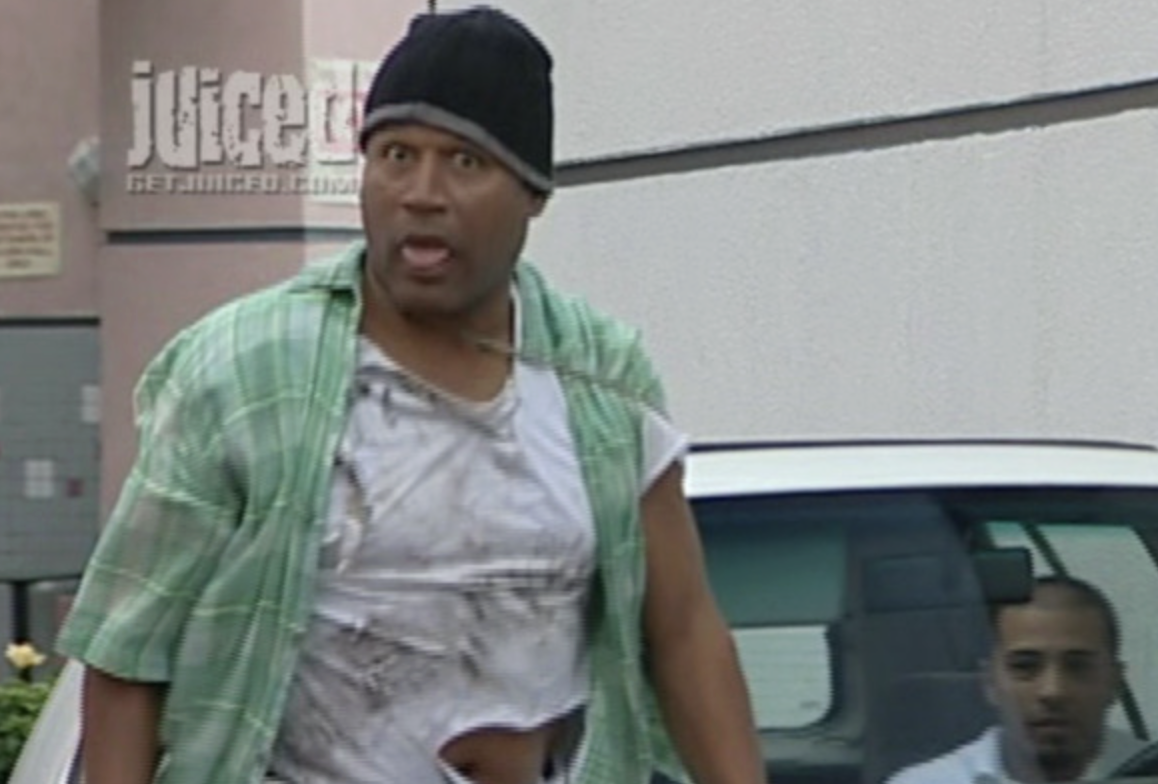
A bizarre chapter from O.J. Simpson’s post-trial life is being dragged back into the spotlight — and the story behind it may be even stranger than the show itself.
Years after Simpson was acquitted in the 1994 murders of his ex-wife Nicole Brown Simpson and her friend Ronald Goldman, the disgraced football legend quietly starred in a hidden-camera prank series called Juiced.
The show never became a mainstream television hit, but a new documentary is revealing just how dark and uncomfortable the project became behind the scenes.
Filmmaker Rebecca Halpern explores the forgotten series in O.J. Unseen: Exploitation of Evil, premiering Sept. 7 and 8 on Investigation Discovery and HBO Max.
“It’s been kind of this mythological project that’s been lurking in the ether that nobody really knew about,” Halpern told Obsessed: The Podcast.
Simpson’s sensational murder trial consumed America for eight months before a jury found him not guilty of murdering Brown Simpson and Goldman.
The case began after the two were found brutally stabbed to death outside Brown Simpson’s Los Angeles home in June 1994.
Although Simpson was acquitted in criminal court, a civil jury later found him liable for their wrongful deaths in 1997 and ordered him to pay $33.5 million in damages.
But roughly a decade after the criminal trial, Simpson apparently saw television comedy as a possible path back into the public’s good graces.
Juiced creator Rick Mahr approached Simpson about starring in a hidden-camera prank show inspired partly by Simpson’s notorious reputation and public persona.
The title itself was a play on Simpson’s famous nickname, “The Juice.”
At the time, prank shows were exploding in popularity thanks to programs such as Ashton Kutcher’s Punk’d on MTV.
Juiced, however, had a much darker hook.
Some of its stunts reportedly referenced Simpson’s own murder case.
One particularly jaw-dropping segment showed Simpson attempting to sell an unsuspecting woman the infamous white Ford Bronco associated with the slow-speed police chase that transfixed millions of Americans in 1994.
For Simpson, Halpern believes the project was about repairing his image.
She said Simpson was willing to “feed the beast” of public fascination if it helped him remain famous or regain some level of acceptance.
But the filmmaker said the crew also had powerful reasons to keep the cameras rolling.
“They knew full well that a confession, or any kind of conversation from O.J. Simpson about the murders, was going to be ratings gold,” Halpern said.
In other words, producers understood exactly why viewers would watch.
“They knew it would get eyeballs,” she added.
Halpern said some crew members entered the project convinced Simpson was guilty, only to find themselves occasionally questioning those beliefs after spending time around him.
Simpson’s charm, friendliness and celebrity presence could apparently be disarming.
Halpern described him as a “dangerous individual, whether you think he killed them or not,” but said people could still become overwhelmed by his charisma.
“And the crew felt that way too,” she said. “Some of them went in thinking he did it. And then there were moments when they were like, ‘Well, maybe he didn’t.’”
According to Halpern, some of the documentary’s most revealing material does not come from the actual pranks at all.
Instead, it comes from behind-the-scenes footage showing Simpson interacting with producers and crew members when the supposedly polished television version was not being filmed.
For Halpern, Juiced represents something much larger than one bizarre celebrity project.
She argues the show captured an early version of today’s relentless competition for attention, clicks and shocking content.
If producers had simply wanted to make an ordinary prank show, she noted, they could have hired almost anyone.
Instead, they hired O.J. Simpson.
“They knew exactly what they were doing,” Halpern said.
The documentary also examines America’s never-ending fascination with Simpson and other true-crime figures whose cases remain cultural obsessions decades later.
Halpern said the Simpson saga had virtually every ingredient of a television soap opera — fame, wealth, violence, celebrity lawyers, shocking evidence, live courtroom drama and a verdict that divided the country.
“The whole thing has made for an enduring mystery that people cannot seem to get enough of,” she said.
O.J. Unseen: Exploitation of Evil premieres Sept. 7 and 8 on Investigation Discovery and will also stream on HBO Max.
Discover more from
Subscribe to get the latest posts sent to your email.