

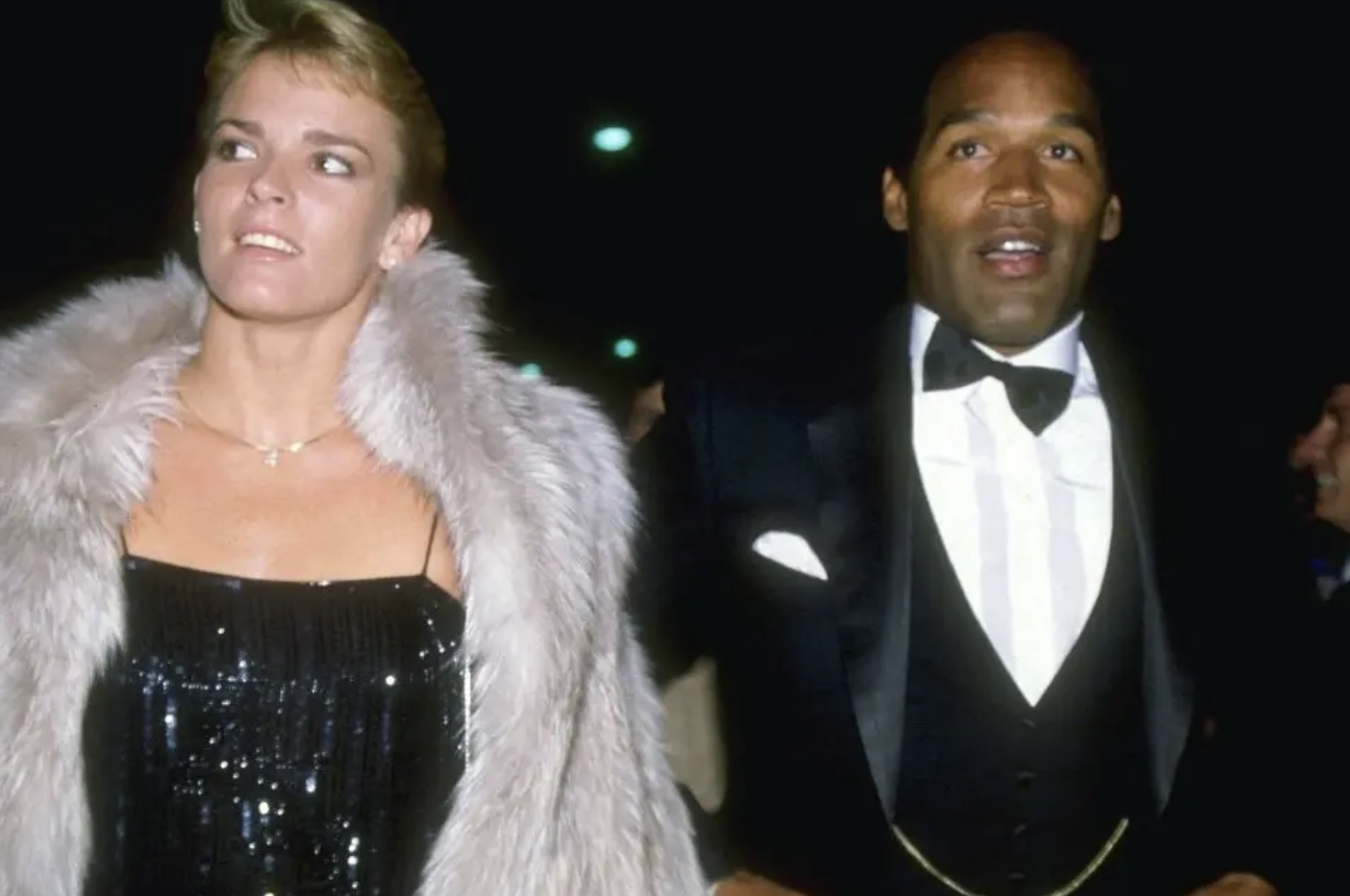
More than three decades after the brutal murders of Nicole Brown Simpson and Ron Goldman, a former FBI profiler is raising a provocative question about one of America’s most infamous criminal cases: Was there another person at the crime scene?
Former FBI profiler and prosecutor Jim Clemente says he believes evidence from Goldman’s injuries could support a theory that O.J. Simpson had an accomplice during the June 12, 1994, killings.
Clemente laid out his theory during a recent appearance with media personality Tom Zenner and Kato Kaelin, the former Simpson houseguest who became a prominent witness during the 1995 murder trial.
Simpson was acquitted of murdering his former wife, Nicole, 35, and Goldman, 25, after a sensational eight-month criminal trial.
A different jury reached a different conclusion in 1997, finding Simpson civilly liable for the deaths and awarding the victims’ families $33.5 million in damages.
Simpson continued denying responsibility until his death from cancer in 2024 at age 76.
Now Clemente says certain details surrounding Goldman’s final struggle deserve another look.
He focused in particular on cuts found in Goldman’s clothing and injuries to his legs.
According to Clemente, the location of some of those wounds led him to theorize that Goldman’s legs may have been raised as he desperately kicked at an attacker.
“With the cuts in his jeans, in his pants that he was wearing at the time, the knife wounds could only have been made if both of his legs were elevated and bent and straightened out like he was kicking,” Clemente said.
From there, Clemente proposed a disturbing scenario.
He believes Goldman could have been restrained from behind by one person while another attacked him from the front.
“The only way that we behaviorally could figure out how that could happen is if somebody has him in a bear hug from behind and he’s being stabbed by somebody in the front,” Clemente said.
“He’s kicking, he’s fighting for his life.”
Clemente also questioned why, under his interpretation of the evidence, Goldman did not suffer the type of extensive wounds to his arms that he would expect if Goldman had been freely punching and defending himself against a knife.
He suggested Goldman’s arms could have been restrained.
The theory is dramatic, but it is important to note that it has not been established as fact.
Investigators who worked the original case reached a different conclusion.
During Simpson’s 1995 criminal trial, lead LAPD detective Tom Lange testified that he believed a single attacker killed both Nicole and Goldman. Lange said Goldman’s injuries suggested he was desperately trying to protect himself but did not necessarily show that another person was restraining him.
Los Angeles County’s chief medical examiner also testified that Goldman could have suffered his fatal injuries while trapped in the narrow, enclosed area near the walkway outside Nicole’s Brentwood condominium.
The coroner said Goldman may have had little room to escape as an attacker wielding a knife cornered him.
Still, the possibility of more than one killer is not entirely new.
During Simpson’s 1996 civil trial, defense pathologist Dr. Michael Baden testified that he believed Goldman’s prolonged struggle could indicate that at least two attackers were involved.
That argument ultimately did not persuade the civil jury, which unanimously found Simpson liable for the deaths.
Clemente is now approaching the evidence from a behavioral-profiling perspective.
He also believes the attack was planned rather than an uncontrolled, spontaneous explosion of rage.
“Whoever committed this crime had an extreme amount of rage and anger in them,” Clemente said.
He argued that the killer had been thinking about the attack beforehand and described the murders as an “organized crime” in the behavioral sense — meaning he believes the perpetrator planned the attack and considered when Nicole would be vulnerable.
Clemente theorized that Nicole was the intended target and Goldman arrived unexpectedly.
Goldman had worked at the Mezzaluna restaurant, where Nicole and her family had eaten earlier that evening. He went to her condominium to return a pair of eyeglasses that Nicole’s mother had accidentally left behind.
Clemente believes that unexpected arrival may have changed whatever plan had been made.
“Of course, he thought she would be alone at that moment, but because she left the glasses there at the restaurant, somebody else showed up,” Clemente said. “That is an unexpected result.”
He also suggested Nicole and Simpson’s two young children, who were inside the home that night, could potentially explain why someone planning an attack might have wanted another person present.
“What if the kids aren’t in bed yet?” Clemente asked. “What if the kids wake up and come down?”
Again, there is no established evidence proving that scenario occurred.
The original prosecution’s case centered on physical evidence it argued connected Simpson directly to the murders.
Blood evidence became a major focus of the criminal trial. Prosecutors presented testimony that blood consistent with Simpson and both victims was discovered inside Simpson’s Ford Bronco, while additional evidence included a bloody glove, shoe impressions and blood recovered along the pathway outside Nicole’s home.
Simpson’s attorneys aggressively challenged the collection, handling and reliability of much of that evidence, helping create the reasonable doubt that resulted in his acquittal on Oct. 3, 1995.
Clemente nevertheless believes investigators and the public should consider the possibility that the crime involved another person.
Asked whether he had an idea who that alleged accomplice could have been, Clemente offered perhaps his most tantalizing answer.
He said he had a “pretty good idea.”
He did not name anyone.
And there is currently no publicly confirmed finding from law enforcement identifying a second killer in the Brown-Goldman murders.
The accomplice theory has nevertheless resurfaced repeatedly during the 32 years since the killings, with investigators, forensic experts, authors and filmmakers continuing to debate how the bloody crime scene should be interpreted.
Even Nicole’s family has encountered the theory before. Nicole’s sister has publicly expressed skepticism about claims that Simpson had help, dismissing versions of the accomplice theory that have circulated for years.
That leaves Clemente’s comments as exactly what they are for now — a veteran profiler’s interpretation of one of the most dissected crime scenes in American history, rather than proof that a second killer has finally been identified.
But his refusal to reveal who he believes may have been there is certain to keep one of the O.J. Simpson case’s longest-running mysteries alive.
Discover more from
Subscribe to get the latest posts sent to your email.