

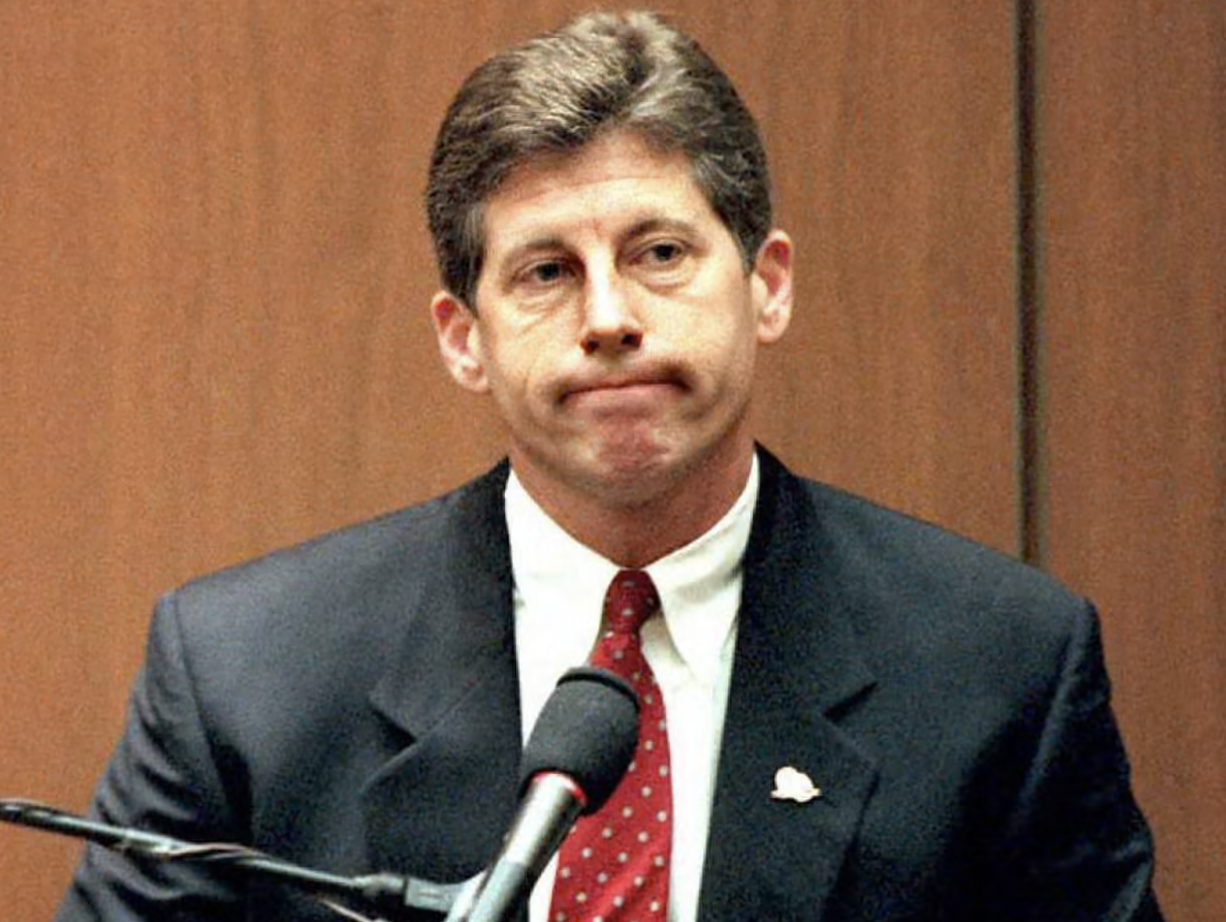
Mark Fuhrman, the disgraced former Los Angeles detective whose name became forever tied to the O.J. Simpson murder trial, has died at 74 — and his passing has dragged one of America’s most explosive courtroom scandals back into the spotlight.
Fuhrman was one of the first detectives on the scene after Nicole Brown Simpson and Ronald Goldman were brutally murdered in Los Angeles in 1994. But instead of becoming remembered as the cop who helped solve the case, he became one of the biggest reasons the prosecution’s case fell apart in front of the nation.
His credibility was shattered during Simpson’s televised murder trial when recordings surfaced of him using racist language. That bombshell became a gift to Simpson’s defense team, which argued that Fuhrman’s conduct raised serious questions about the investigation.
Simpson was acquitted in 1995 in a verdict that stunned America and split the country down the middle.
Fuhrman later pleaded no contest to perjury after denying under oath that he had used racial slurs.
Now, after his death on May 12, the disturbing allegations and controversies that followed him for decades are being revisited all over again.
One source familiar with the fallout from the case said Fuhrman’s involvement changed everything.
“The horrifying truth is that once Fuhrman became the face of the investigation, the entire prosecution lost credibility with huge sections of the public,” the source said. “Every allegation about him, whether proven or not, poisoned the case further.”
During the trial era, even more explosive claims surfaced about Fuhrman’s alleged behavior outside the courtroom.
A 1995 report claimed Deputy District Attorney Lucienne Coleman alleged Fuhrman had once vandalized another officer’s locker with swastikas after marrying a Jewish woman. She also claimed he walked around on weekends wearing Nazi paraphernalia.
Those claims were never corroborated by the officers and prosecutors named in the allegations, and one prosecution source at the time reportedly dismissed them as “multiple hearsay” and “just gossip.”
But the damage was already done.
To many watching the trial, Fuhrman had become the symbol of everything the defense wanted jurors to question about the police investigation.
Simpson’s famed attorney Johnnie Cochran later said he warned co-prosecutor Christopher Darden not to put Fuhrman on the stand.
“Darden also knew that Fuhrman was a bad guy,” Cochran said. “He knew he collected Nazi memorabilia; he knew his past record. I went over to him at the trial because I had respect for him, and I said don’t, as a Black man, take Fuhrman as a witness; you’ll be used.”
The controversy surrounding Fuhrman was so big it even made its way into pop culture.
Comedian Dana Carvey mocked the detective during a 1995 comedy routine, using a German accent and calling him “Mark Der Fuhrman.”
But the most shocking material came from reporting by journalist Jeffrey Toobin, who examined Fuhrman’s mental state and past psychiatric sessions in an article titled An Incendiary Defense.
The article included statements attributed to Fuhrman from psychiatric sessions, including disturbing remarks about being damaged by police work and feeling unable to go anywhere without a gun.
The revelations only added to the public image of Fuhrman as a deeply troubled figure at the center of one of the most infamous murder cases in American history.
Fuhrman later tried to defend himself and his police work in his book Murder in Brentwood.
“I apologize for the pain I caused with my insensitive words,” he wrote. “However, one thing I will not apologize for is my policework on the Simpson case. I did a good job; I did nothing wrong.”
But for many Americans, Fuhrman’s legacy had already been sealed.
The former detective was no longer just a witness in the Simpson trial. He became a symbol of doubt, scandal, and a prosecution team that lost control of the narrative.
His role was later dramatized in FX’s American Crime Story, which brought the Simpson trial to a new generation and once again showed how Fuhrman’s past became one of the most devastating weapons in the defense’s case.
Nearly three decades after Simpson walked free, Fuhrman’s death has reopened old wounds from a trial that America never really stopped debating.
And once again, the question remains: Did one detective’s credibility help destroy the case of the century?
Discover more from
Subscribe to get the latest posts sent to your email.