

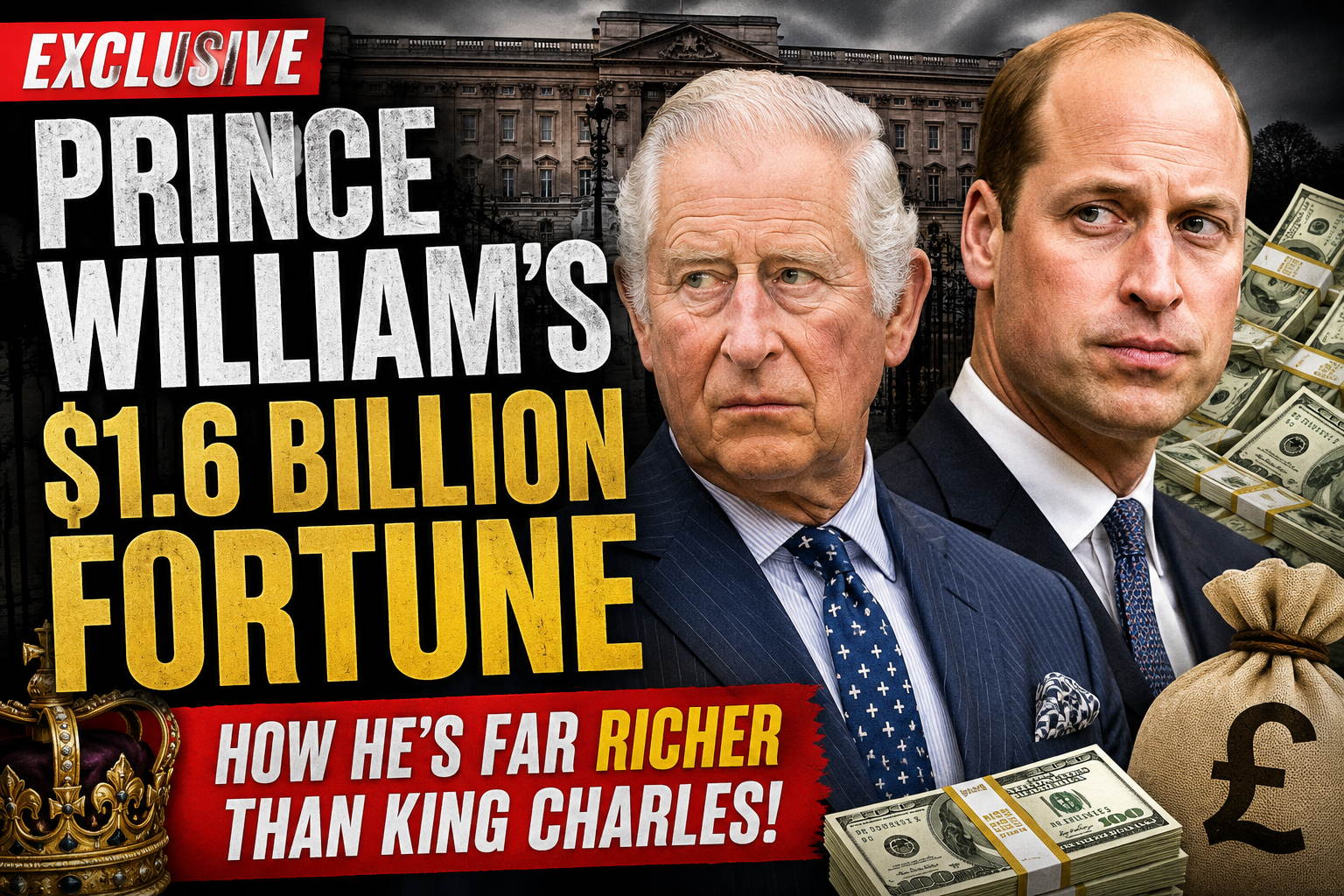
King Charles and Prince William’s massive fortunes are under a harsh new spotlight after royal financial disclosures revealed just how much money sits behind the crown — and how the King’s own son appears to be far richer than him.
The latest figures have sparked fresh questions about royal wealth, public money and whether Britain’s most famous family is being transparent enough at a time when many ordinary families are still struggling to pay their bills.
According to the latest annual financial accounts from the Royal Household, King Charles has become the first British monarch to voluntarily reveal his personal tax payments since taking the throne.
But the disclosure has not quieted critics.
Instead, it has drawn even more attention to the jaw-dropping fortunes surrounding the monarchy — especially the wealth of Prince William, whose control of the Duchy of Cornwall has reportedly helped push his estimated net worth to around $1.6 billion.
That puts William far ahead of his father, whose fortune is estimated at roughly $898 million.
The massive numbers have fueled a new debate over whether the Royal Family can keep defending its financial arrangements while also receiving public funding.
Charles has spent years trying to present himself as a careful, old-fashioned royal who does not waste money. He has often been seen wearing older suits and jackets, and in 2023, he even made headlines after being photographed with a hole in his sock while visiting a mosque in London’s Brick Lane.
But the latest accounts paint a much more expensive picture of life inside the monarchy.
One of the biggest eyebrow-raising details involves the Royal Train, which is expected to be retired after another year of service. Despite being used only four times during the reporting period, it reportedly cost about $211,000 to operate.
Royal helicopter travel also came with a hefty price tag. The King and other members of the Royal Family reportedly made 177 helicopter trips, with each journey costing an average of about $5,000.
The Sovereign Grant, which helps fund the King’s official duties and the Royal Household, has also drawn attention after increasing under the latest arrangement. The grant is funded through profits generated by the Crown Estate, but critics have long argued that the public deserves a clearer picture of where the money goes.
Charles has repeatedly pushed the idea of a smaller, more modern monarchy. As Prince of Wales, he voluntarily published details of his tax payments, and he has now continued that practice as King by revealing the amount of income tax and capital gains tax he pays.
Supporters say that is a historic step toward transparency.
Critics say it is not enough.
The scrutiny comes as Charles continues a demanding public schedule while undergoing cancer treatment. Despite his health battle, the King completed more official engagements than any other member of the Royal Family during the latest reporting year.
Still, questions over royal spending are not going away.
Another major flashpoint is Buckingham Palace. The famous royal residence has undergone an enormous refurbishment project costing nearly $530 million, yet Charles has reportedly decided to remain at Clarence House rather than move into the palace once the work is finished.
That decision has raised fresh concerns about the cost of maintaining royal properties — especially if the monarch does not plan to live full-time in the most famous one.
Prince William has also tried to frame himself as a reformer.
The Duchy of Cornwall’s latest accounts show the Prince of Wales plans to sell about 20 percent of the estate’s landholdings over the next decade. The proceeds are expected to be put toward sustainable investments and community housing projects.
But even that has not stopped questions about William’s extraordinary wealth.
The Duchy of Cornwall is a vast estate that traditionally provides income for the heir to the throne. Now that William controls it, his financial position has soared past that of his father.
The revelations have left campaigners and royal watchers asking whether the monarchy’s financial system still makes sense in modern Britain.
One former palace aide said the numbers are impossible to ignore at a time when many families are under serious financial pressure.
“At a time when so many families are struggling to pay the bills, figures like these are bound to leave people asking whether the monarchy truly understands the pressures facing ordinary households,” the former aide said.
“Publishing tax payments is one thing, but it doesn’t answer the bigger question of how anyone can justify such extraordinary levels of wealth while receiving public funding.”
The insider added that transparency is welcome, but only if it comes with real accountability.
“Greater transparency is welcome, but transparency without accountability risks looking like a public relations exercise rather than meaningful reform,” the aide said.
For critics, the issue is not simply whether Charles pays tax. It is whether the public is getting the full story about the scale of royal wealth, the cost of royal life and the future of public funding for the monarchy.
“People will inevitably compare these fortunes with the financial realities facing millions across the country,” the insider said. “That’s a difficult contrast for the Royal Family to overcome.”
The aide added, “The monarchy cannot expect applause for revealing tax payments if the wider financial picture still leaves the public with more questions than answers about their huge wealth.”
For now, Charles may be trying to project an image of duty, tradition and restraint.
But with William’s billion-dollar fortune, a half-billion-dollar palace renovation, pricey helicopter travel and a growing demand for answers, the Royal Family’s money problems are not about being short on cash.
They are about explaining why they have so much of it.
Discover more from
Subscribe to get the latest posts sent to your email.