

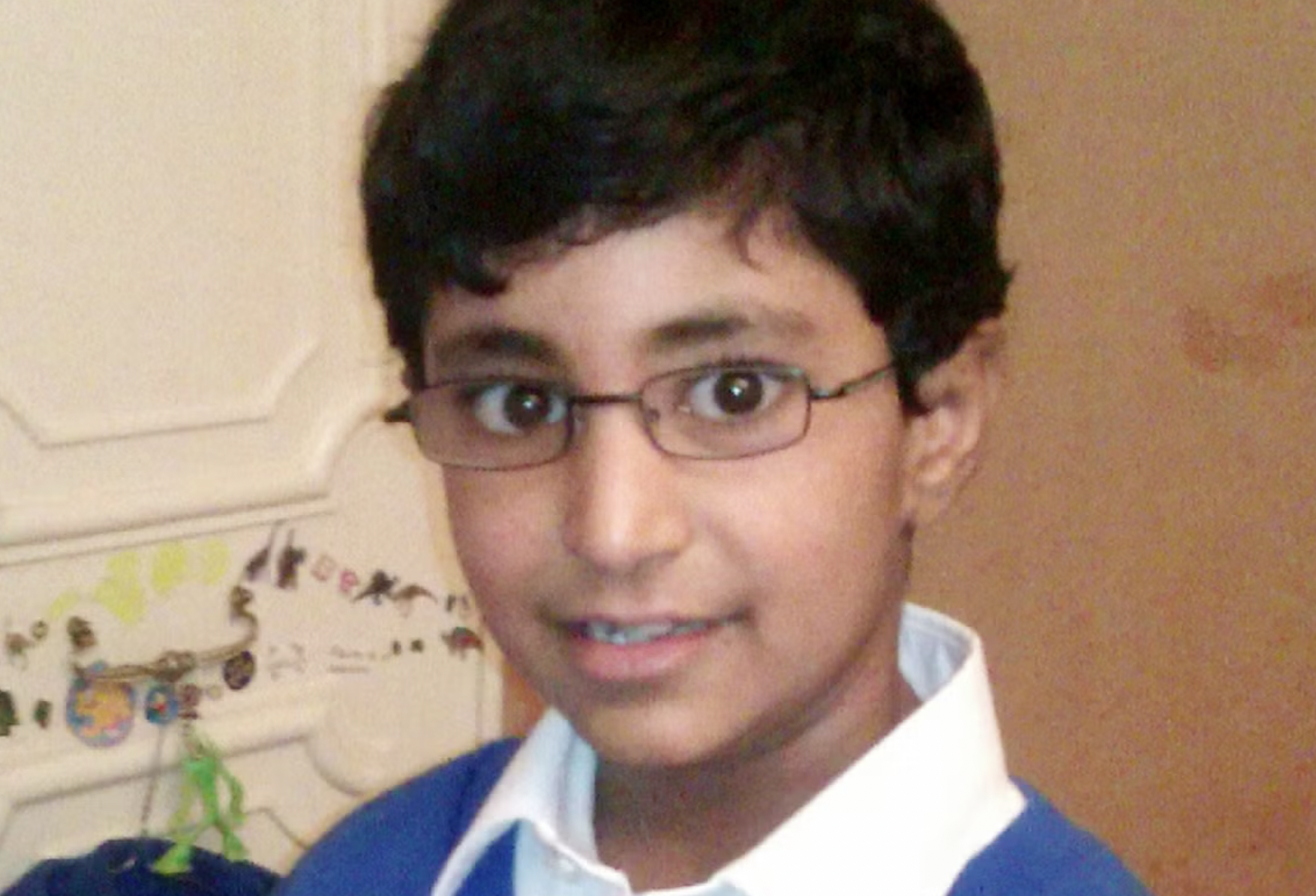
A 13-year-old boy died after suffering a catastrophic allergic reaction when a classmate threw cheese at him during a school break, a London inquest heard.
Karanbir Singh Cheema, known as Karan, collapsed less than 10 minutes after the incident at William Perkin Church of England High School in Greenford, west London, on June 28, 2017.
The schoolboy, who had severe allergies to dairy, wheat, gluten and nuts, was rushed to Great Ormond Street Hospital. He died 10 days later.
Now, the heartbreaking case is raising troubling questions about allergy awareness, emergency treatment and whether schools are prepared for children with life-threatening medical conditions.
The inquest heard that Karan also suffered from asthma and eczema, making his condition especially dangerous once the allergic reaction began.
Former teacher Lucjan Santos told St Pancras coroner’s court that Karan came to him at the end of break and said another pupil had thrown cheese at him.
Karan reportedly pointed to the back of his neck and explained that he was allergic to cheese.
At first, Santos said, the boy appeared calm. The teacher directed him to the school welfare office and asked him to fill out an incident report.
But within minutes, the situation took a terrifying turn.
Welfare officer Bonny Campbell told the court that Karan’s condition quickly spiraled after he arrived at the office.
The teenager began scratching at his neck, struggling to breathe and becoming increasingly distressed.
The inquest heard that blood seeped through his shirt from the scratching. He grew panicked, unsteady and visibly worse as staff tried to help him.
He was given Piriton, an antihistamine, and used his inhaler. But when his symptoms continued to deteriorate, staff administered an EpiPen.
Campbell said the injection seemed to have little effect. Karan became pale, limp and unresponsive.
In a disturbing detail, the court heard that the EpiPen used in the emergency was a year out of date.
Staff did not give a second dose, Campbell said, because the first aid guidance they had received advised waiting 10 minutes before administering another EpiPen.
She also said emergency call handlers did not tell them to give a second injection while they waited for paramedics.
The inquest heard there was another possible EpiPen on site, but it belonged to another pupil. Staff chose not to use it.
Consultant pediatrician Dr. Vivien Chan later told the hearing that standard medical advice usually recommends giving a second EpiPen after five minutes if symptoms continue.
She said a second dose could sometimes be given even sooner if necessary, though she could not say whether it would have saved Karan’s life.
The two boys involved in the cheese incident, who were both 13 at the time, told the court they did not know Karan had a dairy allergy.
When asked whether pupils understood that allergies can be fatal, Santos said he hoped they did.
Dr. Chan told the hearing that schools should keep copies of students’ allergy action plans on site. She said the responsibility for sharing those plans often falls to parents, even though staff may be the ones forced to act in a medical emergency.
The inquest was expected to conclude later that week.
Karan’s death remains a devastating reminder that for some children, food allergies are not a minor issue or a playground joke. One careless act can become a life-or-death emergency in a matter of minutes.
Discover more from
Subscribe to get the latest posts sent to your email.