

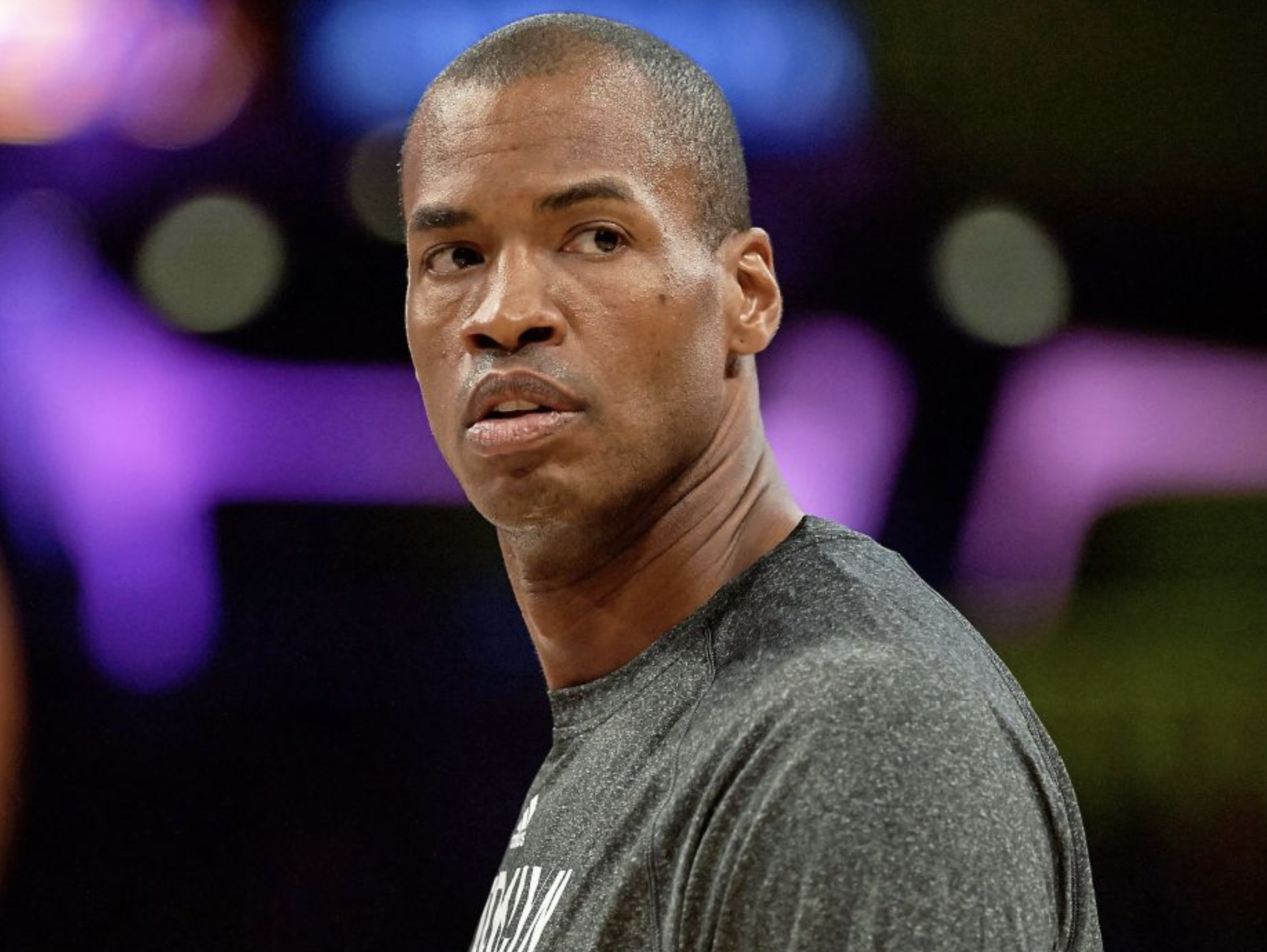
Jason Collins — the former NBA center who made history as the league’s first openly gay active player — has revealed he’s battling Stage 4 glioblastoma, one of the most aggressive forms of brain cancer.
In a deeply personal message shared through ESPN, Collins, 46, said the diagnosis came “incredibly fast,” just months after marrying his longtime partner, film producer Brunson Green, in a joyful Austin, Texas ceremony this past May.
“Something was really wrong,” he recalled. “I was in the CT machine for five minutes before the tech pulled me out. That’s when I knew it was bad.”
What doctors discovered was devastating — a large, fast-growing tumor spreading across both hemispheres of his brain. Within hours, Collins’s mental clarity and memory began to vanish. “I turned into an NBA version of Dory from Finding Nemo,” he said.
Collins says his tumor is a “wild type,” the kind that mutates and resists traditional treatment. But like any elite athlete, he’s approaching it as the toughest matchup of his life.
“To me it’s like, ‘Shut up and go play against Shaq,’” he said. “This is the challenge. I’ve faced tough opponents before.”
Since beginning treatment — a combination of radiation, chemotherapy, and an experimental targeted therapy in Singapore — Collins has shown steady improvement. “By my third radiation session I could walk again,” he said, crediting Green and his family for refusing to give up when doctors initially prepared them for the worst.
Collins first made headlines in 2013 when he came out publicly, shattering barriers in professional sports. Now, he’s once again using his platform to inspire others.
“I have cancer — and I’m going to fight it,” he said. “If what I’m doing doesn’t save me, maybe it helps someone else one day.”
His message echoes a family memory: his grandmother, who lived years beyond her Stage 4 stomach cancer prognosis. “When a doctor gives you a time frame, I’m like, ‘Yeah, yeah, yeah — I’ve got more fight in me.’”
Collins’s treatments continue overseas as he works toward eligibility for a personalized immunotherapy. His goal: to outlast expectations and pave a new path for future patients.
“If I can help someone I’ll never meet,” he said, “then it’s worth it.”
Source: ESPN interview, Dec 11 2025.
Discover more from
Subscribe to get the latest posts sent to your email.