

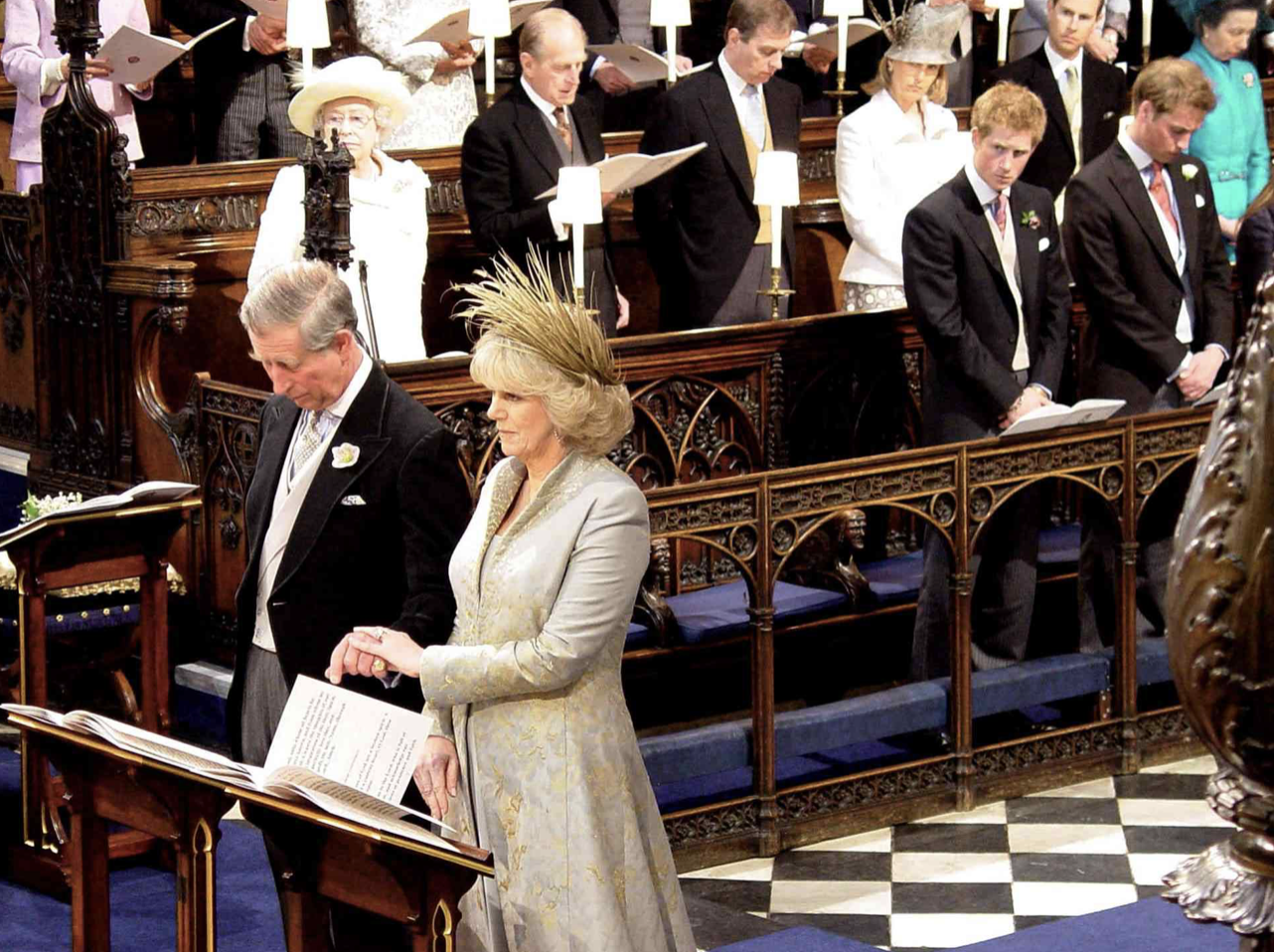
Queen Camilla reportedly had serious doubts about marrying King Charles, despite their decades-long romance, with royal biographers revealing she feared becoming his wife would cost her the independence she had fought to preserve.
The 79-year-old Queen, who married Charles in April 2005, was allegedly so apprehensive about entering the royal spotlight that she tried to convince him marriage was a terrible idea.
And according to royal insiders, her hesitation had little to do with whether she loved the future king.
Instead, Camilla was reportedly frightened by the prospect of surrendering her private life, facing relentless public scrutiny and stepping into a position forever associated with Princess Diana.
Royal biographer Ingrid Seward explored those concerns in her book My Mother and I, revealing that Camilla initially resisted the idea of becoming Charles’ wife.
“The full implication of what it would mean to be Prince Charles’s wife frightened Camilla,” Seward wrote.
The author said Camilla was determined not to become consumed by the demanding world of royal responsibilities.
She reportedly believed marriage would fundamentally change her relationship with Charles, replacing their relatively private companionship with an endless schedule of official duties.
According to Seward, Camilla even attempted to persuade Charles to abandon his plans.
She reportedly told friends that the prospect of marriage was “farcical” and unlikely to happen because Charles would always place royal duty above everything else.
The revelation offers a surprising look at one of the most controversial love stories in modern royal history.
Charles and Camilla first developed a romantic connection in the early 1970s, years before either married someone else.
Camilla went on to marry British Army officer Andrew Parker Bowles in 1973, while Charles married Lady Diana Spencer in a lavish royal wedding in July 1981.
But Charles and Camilla’s relationship remained a source of controversy throughout the following decades.
As Charles’ marriage to Diana deteriorated, revelations about his relationship with Camilla became central to one of the monarchy’s most damaging public scandals.
Diana famously acknowledged Camilla’s presence in the marriage during her 1995 interview with the BBC’s Panorama.
By then, Charles and Diana had separated, and their marriage formally ended in August 1996.
Diana’s death in a Paris car crash the following year intensified public emotions surrounding the royal family.
For Camilla, the prospect of becoming Charles’ wife now carried an additional burden.
She would inevitably be compared with Diana, whose popularity remained enormous even after her death.
Many people blamed Camilla for contributing to the breakdown of Charles and Diana’s marriage, making her eventual acceptance within the monarchy far from certain.
Royal commentators believe the hostility made Camilla especially cautious about accepting a more prominent public role.
But Charles reportedly had other plans.
According to Seward, the future king was determined to have Camilla recognized as his official partner rather than continuing their relationship largely outside the public spotlight.
He also wanted his mother, Queen Elizabeth II, to accept the woman he hoped to marry.
That created a difficult situation for Camilla.
She had already endured years of negative headlines and intense public attention, yet marriage threatened to bring even greater scrutiny.
Unlike Charles, who had been raised from birth to understand the monarchy’s expectations, Camilla had spent much of her adult life enjoying a relatively informal lifestyle.
She valued time with friends, family gatherings, outdoor activities and the ability to make decisions without the restrictions of a royal schedule.
Becoming the wife of the future king meant accepting responsibilities she had never originally expected to hold.
Another royal author, Tina Brown, described those anxieties in her book The Palace Papers.
Brown suggested Camilla had once believed there were advantages to remaining Charles’ longtime companion rather than becoming his wife.
The royal biographer portrayed Camilla as someone who disliked public speaking, formal clothing, frequent travel and the constant attention surrounding official engagements.
Charles, meanwhile, was accustomed to a highly structured routine built around punctuality, briefings and carefully planned appearances.
Brown described their contrasting personalities, suggesting Camilla sometimes found his demanding schedule exhausting.
One account recalled Charles becoming impatient when Camilla questioned the details of an engagement, asking whether she had read the official briefing.
For someone who preferred a relaxed approach to life, the idea of following such routines every day was reportedly intimidating.
The differences also gave Camilla an unexpected perspective on Diana’s experiences.
According to Brown, one of Camilla’s friends said she had begun to develop some understanding of the frustrations Diana experienced while married to Charles.
Although the two women faced very different circumstances, both had encountered the extraordinary demands of life alongside a future monarch.
Camilla’s reported fears were not entirely unfounded.
The British royal family operates under a strict system of public responsibilities, with senior members attending charitable events, receiving foreign dignitaries and representing the monarchy at official ceremonies.
Those duties can require extensive travel and long periods away from home, while even routine public appearances attract scrutiny.
The wife of the heir to the throne also faces pressure to maintain a carefully managed public image.
Camilla reportedly worried that accepting such responsibilities would mean losing the privacy and independence she had spent decades enjoying.
Nevertheless, Charles remained determined to make their relationship official.
The couple gradually began appearing together publicly, with Camilla taking on a more visible role as Charles worked to secure acceptance for their marriage.
In February 2005, Clarence House announced that they were engaged.
Their wedding took place on April 9 that year in a civil ceremony at Windsor Guildhall.
A religious blessing followed at St. George’s Chapel, Windsor Castle, attended by Queen Elizabeth II and other members of the royal family.
Camilla received the title Duchess of Cornwall, while Charles continued serving as Prince of Wales.
Although their marriage initially faced public skepticism, Camilla gradually established herself as a working member of the royal family.
She developed a particular interest in literacy, supporting reading programs and organizations promoting education.
She also became involved in charitable work addressing domestic violence, sexual assault and osteoporosis.
Over time, her public role expanded, and she became an increasingly familiar presence alongside Charles at major royal events.
The most significant change came in September 2022, when Queen Elizabeth II died and Charles became king.
Camilla, who had once reportedly been frightened by the thought of becoming his wife, was now Queen Consort.
The couple were crowned together at Westminster Abbey on May 6, 2023.
The transformation was remarkable considering the hostility Camilla had faced during the 1990s.
A woman who had once been one of the monarchy’s most controversial figures was now occupying one of its most prominent positions.
Yet despite the responsibilities that come with royal life, Camilla has continued trying to preserve aspects of her personal identity.
She remains devoted to reading and has developed her literary interests into a charitable initiative through the Queen’s Reading Room.
In a recent BBC documentary, Camilla offered a glimpse into the couple’s private routine, revealing that she and Charles enjoy spending quiet time reading before dinner.
The Queen joked that her husband sometimes interrupts her concentration by laughing at something in his book.
The lighthearted revelation suggested that, despite their formal public roles, the couple still values ordinary moments together.
More than 21 years after their wedding, Charles and Camilla remain partners in both their personal lives and royal responsibilities.
But the accounts from Seward and Brown offer a reminder that their marriage was never as straightforward as it might appear today.
For Charles, marrying Camilla represented the chance to make his longstanding relationship official.
For Camilla, according to those familiar with her concerns, it meant stepping into a demanding institution that had already brought enormous upheaval to her life.
And the woman who once reportedly tried to talk Charles out of marrying her ultimately became the Queen of the United Kingdom.
Discover more from
Subscribe to get the latest posts sent to your email.
Oh bull crap. That was her goal, her end game … to marry him and become Queen. She did all that damage, all that controversy, claimed that she loved him forever and all that, and then claims she didn’t want to marry him when it finally came down to it? Bull crap.
I DON\’T BELIEVE HER! SHE COULD HAVE DISCONTINUED HER RELATIONSHIP WITH HIM!!
THAT\’S BULL SHIT!