

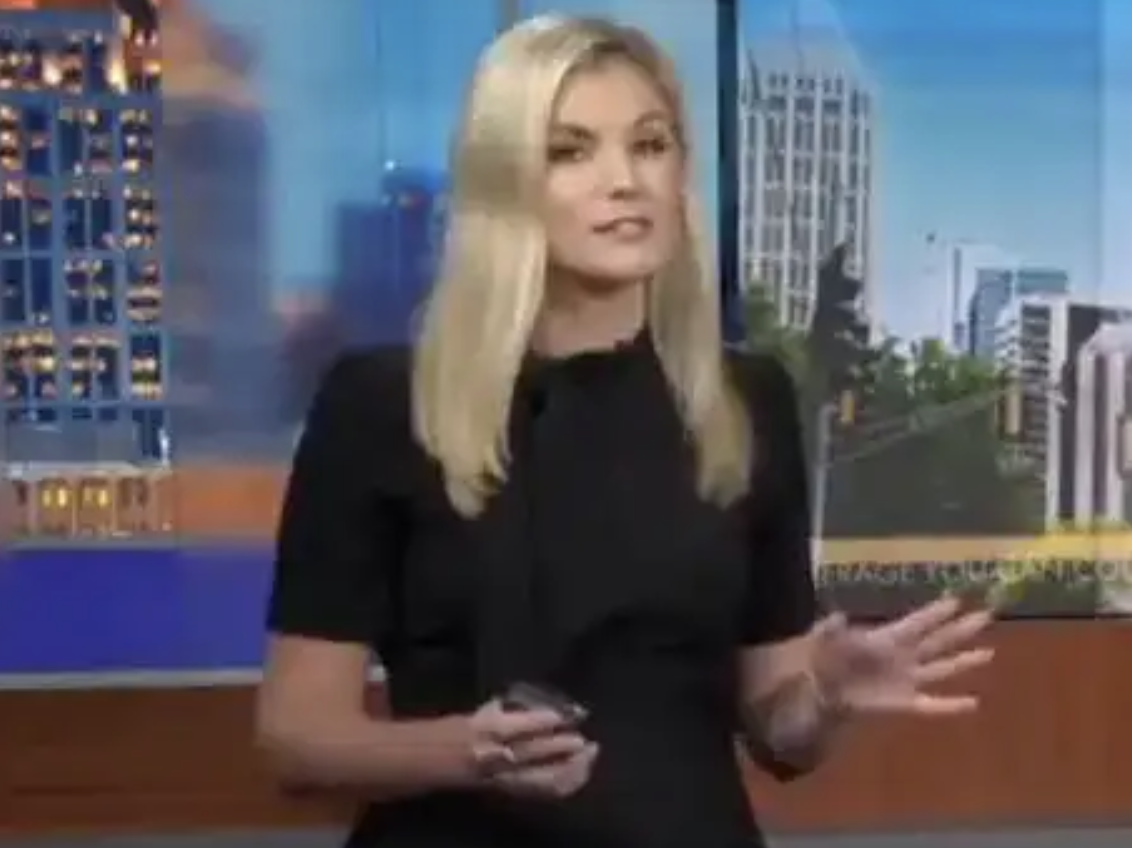
A Georgia meteorologist is standing by her decision to interrupt one of the biggest college football games of the season after frustrated fans complained that her severe weather coverage went on far too long.
WSB-TV Channel 2 meteorologist Ashley Kramlich found herself at the center of a heated debate Saturday night, October 10, when a tornado warning forced the Atlanta television station to cut into its broadcast of the highly anticipated Georgia-Alabama showdown.
The interruption came during a tense second quarter as Alabama was driving downfield with just 40 seconds remaining before halftime. Instead of hearing the game’s announcers, viewers suddenly found themselves listening to urgent weather updates.
Kramlich appeared in a split-screen broadcast alongside storm radar, explaining that a potentially dangerous tornado was threatening parts of central Georgia.
Although the game remained visible, the weather coverage replaced commentary from ESPN announcers Chris Fowler and Kirk Herbstreit, leaving some football fans furious.
The warning was not a false alarm or routine weather advisory. The National Weather Service issued a tornado warning at 9:11 p.m. for portions of Butts and Jasper counties after radar detected rotation in a thunderstorm capable of producing a tornado.
The storm was moving northeast at approximately 25 mph, with forecasters warning that flying debris, damaged homes and downed trees were possible. Residents in the affected areas were urged to seek shelter immediately.
By 9:20 p.m., the warning had been canceled for Butts County, although it remained in effect for part of Jasper County until 9:30 p.m.
The dangerous weather was part of the aftermath of Hurricane Isaias, which had made landfall along Florida’s Gulf Coast the previous evening before bringing heavy rain, strong winds and tornado threats into Georgia.
But for fans watching the crucial Southeastern Conference matchup, the timing could hardly have been worse.
Georgia, ranked No. 2 nationally, was battling sixth-ranked Alabama in a game with major conference championship and College Football Playoff implications. The Bulldogs eventually pulled off a dramatic 20-17 victory, handing Alabama its first loss of the season.
The following day, Kramlich addressed the backlash and made it clear that protecting viewers would always take priority over football.
She acknowledged that she was a football fan herself and understood why the interruption had upset viewers.
However, she insisted that a tornado warning represented a serious threat that required immediate attention.
“When a tornado warning is issued, your safety has to come first,” Kramlich explained.
She also defended the station’s decision to use a split-screen format, allowing viewers to continue following the game while receiving information about the storm.
“We have a responsibility to interrupt programming to bring you potentially life-saving information when severe weather threatens our communities,” she said.
Despite her explanation, several viewers continued to argue that the problem was not the initial warning but how long the coverage continued.
One frustrated viewer complained that the broadcast spent too much time explaining weather terminology instead of quickly identifying which communities were in danger.
Another encouraged the station to review the broadcast and eliminate information that was not immediately necessary.
A third viewer argued that repeated explanations became excessive after the warning and safety instructions had already been delivered.
The criticism highlights a difficult balancing act for local television stations during severe weather emergencies.
Tornado warnings are issued when a tornado has been spotted or when radar indicates one may be developing. Unlike a tornado watch, which means conditions are favorable for tornadoes, a warning calls for immediate protective action.
Broadcasters must also consider viewers who may have just tuned in or missed earlier announcements, making repeated location updates and safety instructions important during an active threat.
Saturday’s dangerous weather had already disrupted plans surrounding the game. President Donald Trump canceled his scheduled appearance in Tuscaloosa, citing Hurricane Isaias and the need to keep emergency personnel focused on storm response rather than presidential security.
On the field, Georgia ultimately secured the victory with a 23-yard field goal by Peyton Woodring late in the fourth quarter.
For Kramlich, however, the biggest controversy of the night had nothing to do with the final score.
The meteorologist’s response made her position clear: Fans may disagree with how long a broadcast interruption should last, but when a tornado threatens local communities, keeping viewers safe comes before keeping the game on television.
Discover more from
Subscribe to get the latest posts sent to your email.
A tornado warning is greatly more important than the game…and the game can be replayed after the warning is issued. It’s amazing how many incredibly STUPID people are out there.