

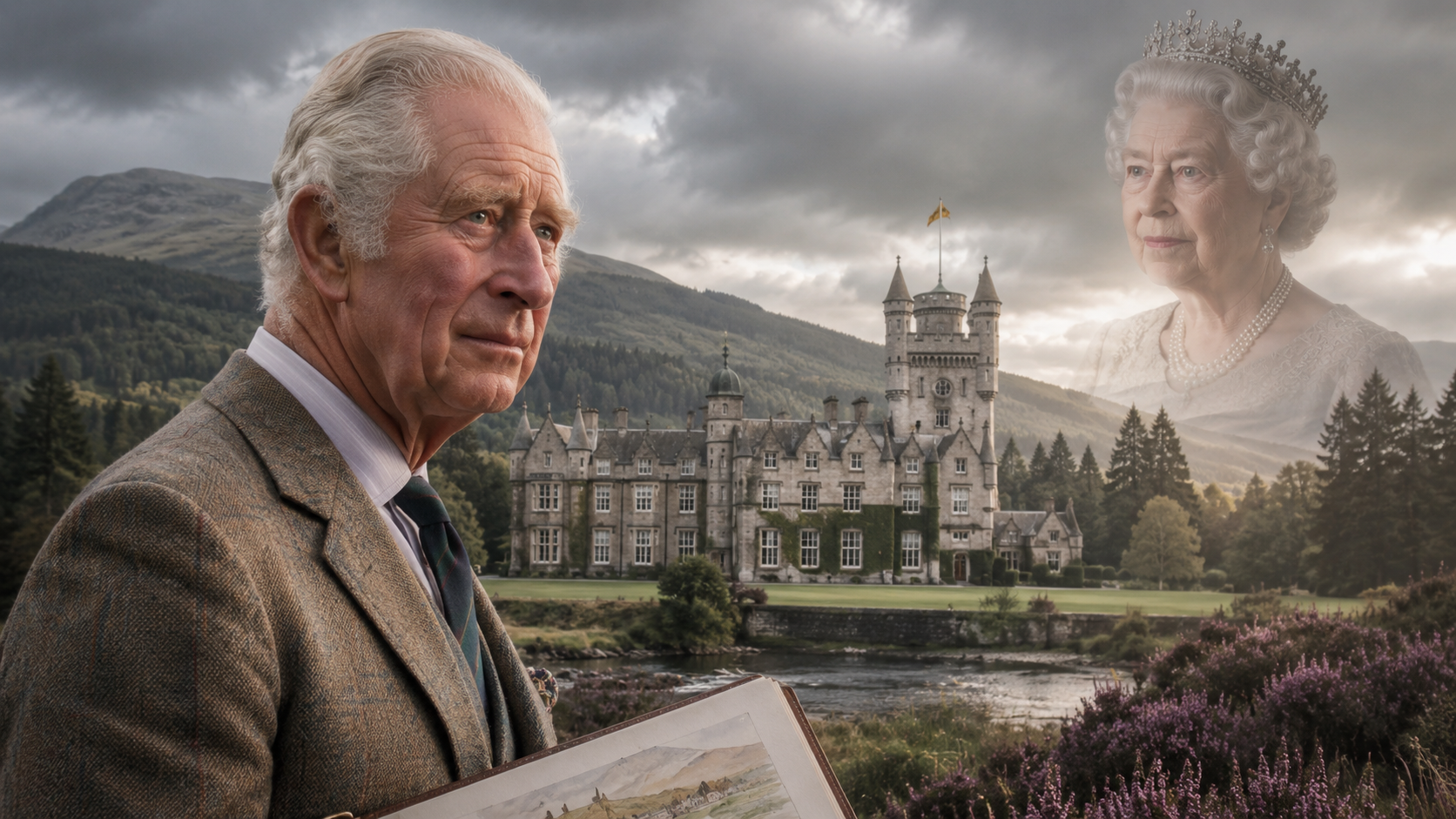
King Charles is opening his heart about the place that meant the most to his late mother, Queen Elizabeth II.
The 77-year-old monarch has written a touching tribute to the Queen in the foreword of Balmoral, a new guidebook by author Mary Miers about the royal family’s beloved Scottish estate.
But royal insiders say the King’s deeply personal words show something even more emotional: Charles is still carrying the pain of losing his mother nearly four years after her death.
Queen Elizabeth died at Balmoral in September 2022 at the age of 96. It was the place she loved most, the private retreat where she spent many happy summers away from the pressure of public life.
Now, Charles is reflecting on the estate’s powerful meaning to his family, and especially to his mother.
“Balmoral has been the cherished Scottish home of my family since the estate was purchased by Prince Albert, my great-great-great-grandfather, in 1852,” Charles wrote in the new book.
He described the Aberdeenshire estate as a place filled with “a sense of timelessness which refreshes the soul.”
The King added that Balmoral has held a special place in his heart since childhood, but said it was especially treasured by his late mother.
“My late mother particularly treasured her time at Balmoral. It was here, in these most beloved of surroundings, that she chose to spend her final days,” Charles wrote.
Those words have struck a powerful chord with royal watchers.
A palace source claimed the King’s tribute reveals just how deeply Balmoral is tied to his grief.
“The King’s words show how powerful Balmoral remains in his memories,” the source said. “It is not simply a family residence to him. It is the place most closely associated with his mother and some of the most important moments of her life.”
The insider added: “Writing about the estate inevitably brings those emotions back to the surface. He is still utterly haunted by his mother’s passing.”
Another royal insider said Charles continues to feel the loss of Queen Elizabeth in a very personal way.
“Those close to the King know he still feels the loss of Queen Elizabeth enormously,” the insider said. “Balmoral was one of her happiest places, and every visit serves as a reminder of both her life and her passing.”
The new book also features a watercolor painting of Balmoral Castle that Charles completed in 1989.
In the foreword, the King writes about the estate’s architecture, its dramatic countryside, and the deep pull it has had on generations of royals.
“Whatever the circumstances in which you are reading this book, I hope that you, too, will be inspired by the rich complexity of the architecture and share in the magic of the surrounding countryside,” Charles wrote.
The estate has also taken on a new role during Charles’ reign.
Balmoral had long been one of the royal family’s most private homes. For years, only limited areas were open to visitors, including the ballroom, which was used for exhibitions and events.
That changed in 2024, when Charles approved guided tours of the castle interiors for the first time.
Visitors can now explore parts of the historic residence, walk the wider estate and gardens, and see features including two mazes the King helped design. The property also includes a conservatory built in 2002 to mark Queen Elizabeth II’s Golden Jubilee.
There is also a gift shop and restaurant, making the estate more accessible to the public than ever before.
A source close to the estate said opening Balmoral to more visitors has been important to Charles.
“He wants people to understand why the estate meant so much to the late Queen and why it continues to hold such a special place in the life of the royal family,” the source said.
For Charles, Balmoral is more than a castle.
It is where his mother found peace. It is where she spent her final days. And now, it is where her memory continues to follow him.
Discover more from
Subscribe to get the latest posts sent to your email.