

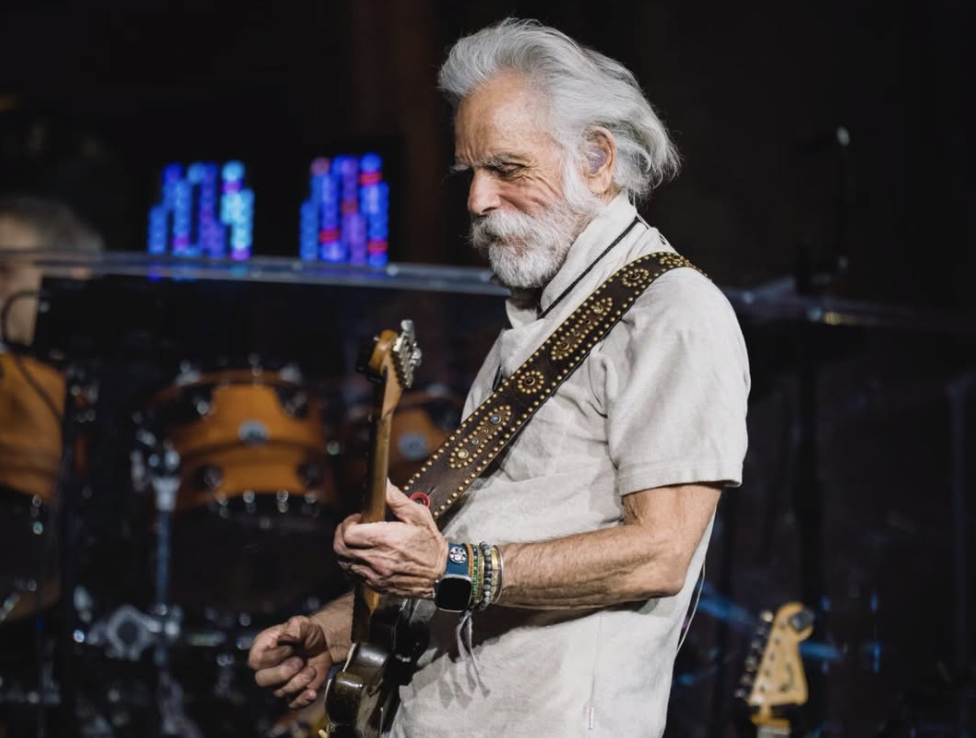
Grateful Dead co-founder Bob Weir, the “other one” who quietly helped reinvent American rock while Jerry Garcia took center stage, has died at 78, his family announced on Instagram.
They said Weir “transitioned peacefully, surrounded by loved ones” after beating cancer “as only Bobby could,” but ultimately losing a battle with serious lung issues. Fans are shattered, with Deadheads mourning the loss of the band’s soulful rhythm guitarist and voice behind classics like “Sugar Magnolia,” “Playing in the Band,” “Truckin’” and “The Other One.”
Weir’s road to rock legend started in Palo Alto. Born in San Francisco in 1947 and adopted as an infant, he spent his childhood getting expelled from schools and struggling with undiagnosed dyslexia. Guitars made more sense than classrooms, and by 14, he was obsessed with music.
Everything changed on New Year’s Eve 1963, when a teenage Weir heard banjo music coming from a local music store. Inside was Jerry Garcia, waiting for students who never showed. Weir had his guitar with him. They jammed, clicked instantly, and decided to start a jug band. That band morphed into Mother McCree’s Uptown Jug Champions, then The Warlocks, and finally the Grateful Dead.
Onstage, Garcia’s solos got the spotlight, but Weir was the secret weapon. With huge hands and strange, wide guitar voicings, he wove hypnotic chords between Garcia’s leads and Phil Lesh’s wild bass lines. Garcia once called him “my left hand” and “the finest rhythm guitarist on wheels,” saying Weir’s playing gave his own solos their true meaning.
Weir’s songs became fan favorites and live staples: “Sugar Magnolia,” “Cassidy,” “Hell in a Bucket,” “I Need a Miracle,” “Throwing Stones” and more. “The Other One” became his signature tune and later the title of a 2014 documentary about his life, The Other One: The Long Strange Trip of Bob Weir.
The lifestyle was as wild as the music. Weir admitted he took LSD “every Saturday without fail, for about a year” and even served as Garcia’s “bag man,” holding and handing out his drugs. He lived in the infamous “Dead house” at 710 Ashbury in San Francisco, sharing space with Beat Generation legend Neal Cassady as the counterculture exploded around them.
When Garcia died of a heart attack in 1995, many thought it was the end of the Dead. Weir refused to let the music die. He hit the road with RatDog, The Other Ones, The Dead, Furthur, Phil Lesh and Friends and Dead & Company, playing thousands of shows and keeping the songbook alive for new generations who never saw the original band.
In 2011, he opened TRI Studios in San Rafael, California, calling it “the ultimate playpen for a musician.” He jammed there with everyone from The National and Vampire Weekend to Phish and Sammy Hagar, proving his influence stretched far beyond the original Deadhead crowd.
Weir’s personal life was just as complicated. He met his future wife, Natascha, when she snuck backstage as a teenager after a show. Years later, they reconnected, married in 1999 and had two daughters, Chloe and Monet. He also reconnected with his biological father, Jack, before Jack’s death in 2015.
In later years, Weir spoke openly about death, saying he had “absolutely no fear” of it and calling it “the last and best reward for a life well-lived,” while insisting he still had plenty of living left to do.
His family’s statement said there is “no final curtain here, not really,” only the feeling of someone “setting off again.” Weir dreamed of a 300-year legacy, with Grateful Dead songs still being played long after everyone onstage now is gone.
For Deadheads, the long, strange trip feels a lot heavier today. But as long as someone is blasting “Sugar Magnolia” or disappearing into “The Other One” at 3 a.m., Bob Weir’s spirit — and that unmistakable rhythm guitar — isn’t going anywhere.
If you’d like, I can cut this down even further to a super-short breaking-news version plus a separate “five wild facts about Bob Weir” sidebar.
Discover more from
Subscribe to get the latest posts sent to your email.