

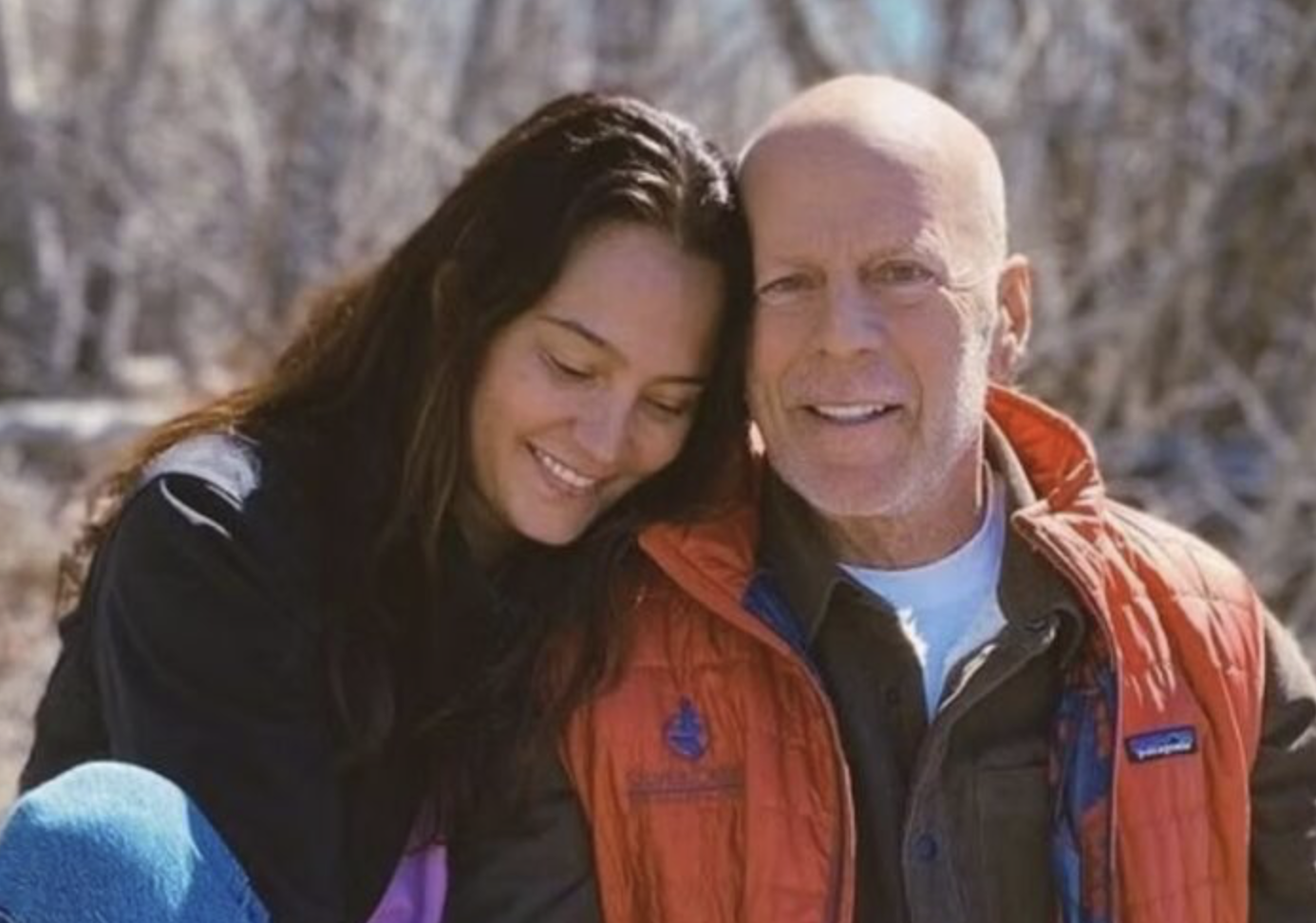
Bruce Willis’ wife, Emma Heming Willis, has opened up about the heartbreaking new reality of life with the beloved actor, revealing that his battle with frontotemporal dementia has taken an emotional toll on their entire family.
In a bittersweet Instagram post, Emma shared a throwback photo of Bruce carrying one of their daughters on his shoulders with the simple caption, “Dads.” Another post showed Bruce tenderly kissing her cheek at a dinner event, captioned with the moving words: “Love is never forgetting how they made you feel.”
The emotional message comes as Bruce, 70, continues his quiet fight against frontotemporal dementia, the cruel brain disorder that affects personality, language, and behavior. Diagnosed in 2023, the Die Hard legend has since stepped away from the spotlight, leaving fans heartbroken but endlessly supportive.
Emma, 47, has been candid about how their daughters, Mabel and Evelyn, are coping. Speaking to The Tamsen Show, she admitted that while the girls are “doing well, all things considered,” they deeply miss the father who was once the center of their world.
“They grieve, they miss their dad so much,” she said. “He’s missing important milestones, that’s tough for them. But kids are resilient… even if I used to hate hearing that.”
Emma confessed she doesn’t know if her daughters will ever fully “bounce back,” but said they’re all “learning” to live with their new reality.
In a deeply personal revelation, Emma shared that she made the agonizing decision to move Bruce into his own home where he could receive 24-hour care.
“It was one of the hardest decisions I ever had to make,” she said. “But among the sadness and discomfort, it was the right move—for him, for our girls, for me. Ultimately, I could get back to being his wife. And that’s such a gift.”
The move, she explained, also allowed Bruce’s friends and family to visit and connect without her anxiety or need to manage every detail. “It’s made such a difference,” she said. “They can have their own experience with him without me hovering.”
Emma admitted that Bruce’s decline has been “very painful to watch,” describing the process as a “slow burn.”
“We’ve been with Bruce every step of the way,” she shared. “It’s not like this fast track where one day he just stopped communicating. We still connect with him in our own special way—it just looks different now.”
Sadly, frontotemporal dementia has no cure. Patients typically live eight to ten years after symptoms appear, meaning Bruce’s journey will likely continue to be a difficult one — but surrounded by love, support, and the family that refuses to give up on him.
Discover more from
Subscribe to get the latest posts sent to your email.