

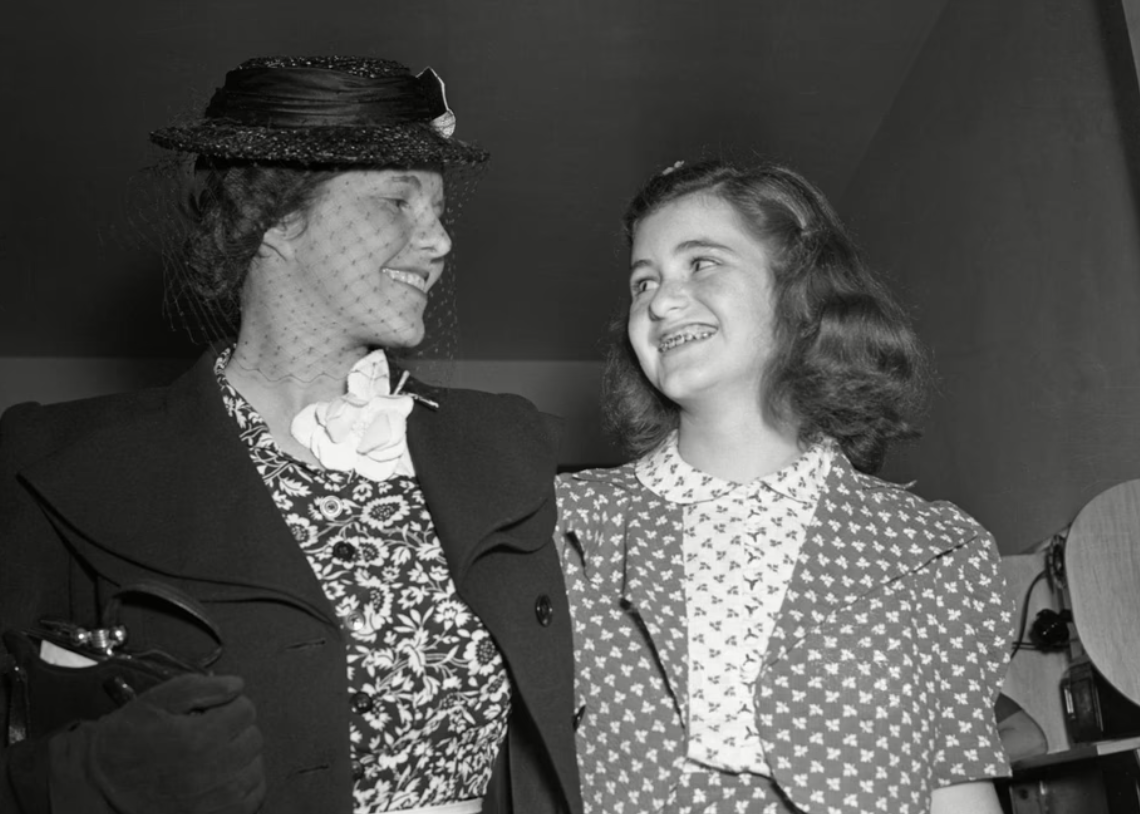
Behind the glamour, wealth and political power of America’s most famous political dynasty lies a heartbreaking family secret that remained largely hidden from the public for decades.
Rosemary Kennedy, the younger sister of President John F. Kennedy, was just 23 years old when her powerful father authorized a controversial brain operation that would permanently change her life.
The procedure, performed in 1941, left the once-vibrant young woman severely disabled, unable to care for herself and eventually isolated from much of her famous family for years.
Her father, Joseph P. Kennedy Sr., had hoped the surgery would address Rosemary’s increasingly difficult behavior. Historians have also described his fears that her struggles could damage the family’s reputation and threaten his sons’ political futures.
Instead, the decision became one of the most troubling chapters in Kennedy family history.
Born September 13, 1918, Rosemary was the third of Joseph and Rose Kennedy’s nine children and their eldest daughter.
Although she grew up surrounded by privilege, her childhood was considerably different from that of her siblings.
Rosemary experienced developmental difficulties from an early age, struggling with reading, writing and other academic skills. Some accounts suggest complications during her birth may have contributed to her disabilities, although the precise cause was never definitively established.
Despite these challenges, she enjoyed sports, social gatherings and family activities. During her father’s time as U.S. ambassador to Britain, Rosemary was even presented to King George VI and Queen Elizabeth at Buckingham Palace.
But as she entered adulthood, her parents became increasingly concerned about her emotional difficulties and behavior.
Joseph Kennedy, determined to maintain the family’s carefully cultivated public image, began searching for a medical solution.
In November 1941, he authorized a prefrontal lobotomy, an experimental brain operation promoted at the time as a treatment for certain psychiatric and behavioral conditions.
The decision was reportedly made without consulting Rosemary’s mother, Rose, and it remains unclear whether Rosemary herself was ever asked for consent.
The procedure involved surgically disrupting connections in the brain’s frontal lobes. According to historical accounts, Rosemary remained conscious during parts of the operation while doctors monitored her ability to speak.
The consequences were devastating.
Rather than improving her condition, the surgery severely damaged Rosemary’s ability to communicate and move independently.
She struggled to walk, lost much of her speech and required extensive care.
The young woman who had once attended fashionable parties and accompanied her family to prestigious social events would never regain her former independence.
Following the operation, Rosemary was placed in institutional care. She eventually moved to St. Coletta, a Catholic facility in Jefferson, Wisconsin, where she would spend most of the remainder of her life.
For years, her condition and the circumstances surrounding the surgery were kept largely out of public view.
Historical accounts indicate that several family members were initially unaware of the operation, while Rosemary’s contact with her relatives became severely limited.
Joseph Kennedy reportedly never visited his daughter at St. Coletta.
The separation continued for years, even as her brother John rose to become one of the most recognizable political figures in the world.
While JFK’s presidency brought the Kennedy family unprecedented fame, Rosemary remained largely absent from the public image of the glamorous political dynasty.
It was not until the 1960s that the family began speaking more openly about her disabilities.
In 1962, her younger sister Eunice Kennedy Shriver publicly discussed Rosemary’s condition in a magazine article that challenged widespread misconceptions about intellectual disabilities.
The family eventually renewed contact with Rosemary, particularly after Joseph Kennedy suffered a debilitating stroke in 1961.
Her mother and siblings began visiting her, and she later participated in family gatherings and vacations while continuing to receive specialized care in Wisconsin.
The family’s painful experience would also help inspire a remarkable movement.
Eunice became a leading advocate for people with intellectual disabilities and founded the Special Olympics in 1968, creating opportunities for athletes who had long faced discrimination and exclusion.
President John F. Kennedy also advanced federal programs supporting people with intellectual disabilities, including signing landmark legislation in 1963 to expand services and research.
Although these efforts could not undo what happened to Rosemary, they helped change how Americans understood and supported people with disabilities.
Rosemary lived until January 7, 2005, when she died at the age of 86 in Wisconsin.
Several of her surviving siblings were reportedly at her bedside.
Today, her story remains a haunting reminder of a time when experimental medical procedures, social stigma and the pursuit of family prestige could have devastating consequences.
For a family celebrated for its power, ambition and influence, Rosemary’s life revealed a painful reality that remained overshadowed by the Kennedy political legacy for generations.
Discover more from
Subscribe to get the latest posts sent to your email.
 What's Up Today Editorial Team