

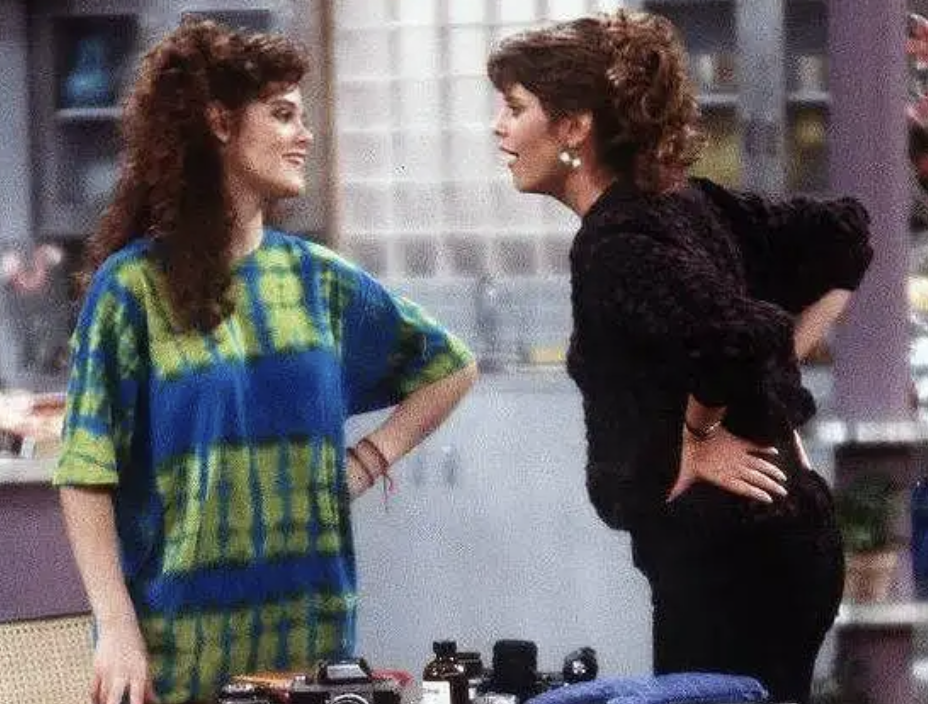
Rebecca Schaeffer was only 21 and on the verge of a major Hollywood career when an obsessed fan tracked down her home address and fatally shot her at her Los Angeles apartment.
More than three decades later, her murder is remembered not only as a shocking Hollywood tragedy, but as a case that helped reshape stalking laws and privacy protections across the United States.
Schaeffer was best known for starring opposite Pam Dawber in the CBS sitcom My Sister Sam, which ran from 1986 to 1988.
Before that, she had worked as a model and appeared briefly on the soap opera One Life to Live.
By the summer of 1989, Schaeffer’s career was moving forward quickly. On the morning she was killed, she was preparing to audition for a role in The Godfather Part III.
But for years, Robert John Bardo had been developing an obsession with the young actress.
Bardo, then 19, had written Schaeffer letters and previously traveled from Arizona to the Warner Bros. studio where My Sister Sam was filmed in hopes of seeing her.
Security guards turned him away.
According to later court testimony and Los Angeles Times reporting, Bardo’s fixation eventually turned violent after he saw Schaeffer appear in the film Scenes from the Class Struggle in Beverly Hills.
The most disturbing part of the case was how easily he was able to find her.
Bardo paid a private investigator $250 to obtain Schaeffer’s address.
The investigator ultimately accessed her information through California Department of Motor Vehicles records, which at the time were far easier for members of the public to obtain than they are today.
Schaeffer did not publicly list her address or phone number.
Yet the system still allowed someone she had never met to locate her home.
On July 18, 1989, Bardo traveled to Schaeffer’s apartment on North Sweetzer Avenue in Los Angeles carrying a .357 Magnum revolver.
When Schaeffer first answered the door, he reportedly showed her a letter she had previously sent him after receiving one of his fan messages.
She asked him to leave.
Bardo returned a short time later.
When Schaeffer opened the door again, he shot her once in the chest.
Neighbors rushed to help after hearing the gunshot.
Schaeffer was transported to a hospital but died from her injuries.
She was just 21 years old.
Bardo fled and was arrested the following day in Tucson, Arizona, after police found him running in and out of freeway traffic.
His trial would later become notable for another reason.
The prosecutor was Marcia Clark, who would become nationally famous several years later as one of the lead prosecutors in the O.J. Simpson murder trial.
In October 1991, a judge found Bardo guilty of first-degree murder and the special circumstance of lying in wait.
He was sentenced to life in prison without the possibility of parole.
But the fallout from Schaeffer’s killing went far beyond the courtroom.
California enacted the nation’s first anti-stalking law in 1990, with Schaeffer’s murder frequently cited as one of the cases that spurred lawmakers to act.
The law became a model for similar legislation adopted across the country.
The LAPD also created a specialized threat-management unit to investigate stalking and other targeted threats.
By the mid-1990s, the unit was handling roughly 200 stalking cases annually, including many involving celebrities.
Schaeffer’s murder also exposed a major privacy problem involving state motor-vehicle records.
At the time, personal information including home addresses could often be obtained for a small fee.
California tightened access to DMV records after her death.
Congress later passed the federal Driver’s Privacy Protection Act in 1994, restricting the disclosure of personal information contained in state motor-vehicle records.
The law bars states from broadly releasing information such as home addresses, phone numbers and Social Security numbers without an authorized purpose or the driver’s consent.
The case became an early example of how easily publicly accessible data could be weaponized against a victim.
That issue has only grown more complicated in the internet era.
Former prosecutor Marcia Clark told the Los Angeles Times in a 2024 retrospective that public awareness surrounding stalking remains just as important as the laws themselves because far more personal information can now be located online than was available in 1989.
Schaeffer’s death also had a profound personal effect on the people who knew her.
Filmmaker Brad Silberling, who was dating Schaeffer at the time she was killed, later wrote and directed the 2002 film Moonlight Mile, which was loosely inspired by the emotional aftermath of her death.
Her parents, Benson and Danna Schaeffer, also became advocates for changes in gun and stalking laws.
Decades later, Rebecca Schaeffer’s career remains frozen at the age of 21.
She had already moved from modeling to daytime television and then to a starring role on a network sitcom, and she was pursuing major film opportunities at the time of her death.
What happened at her apartment in July 1989 became one of Hollywood’s most notorious stalking cases.
But it also forced lawmakers, police departments and the entertainment industry to confront something that had previously been treated far less seriously: the danger posed by obsessive stalking and the ease with which private information could be used to find a victim.
Her murder ended a promising young career.
It also helped change the law.
Discover more from
Subscribe to get the latest posts sent to your email.