

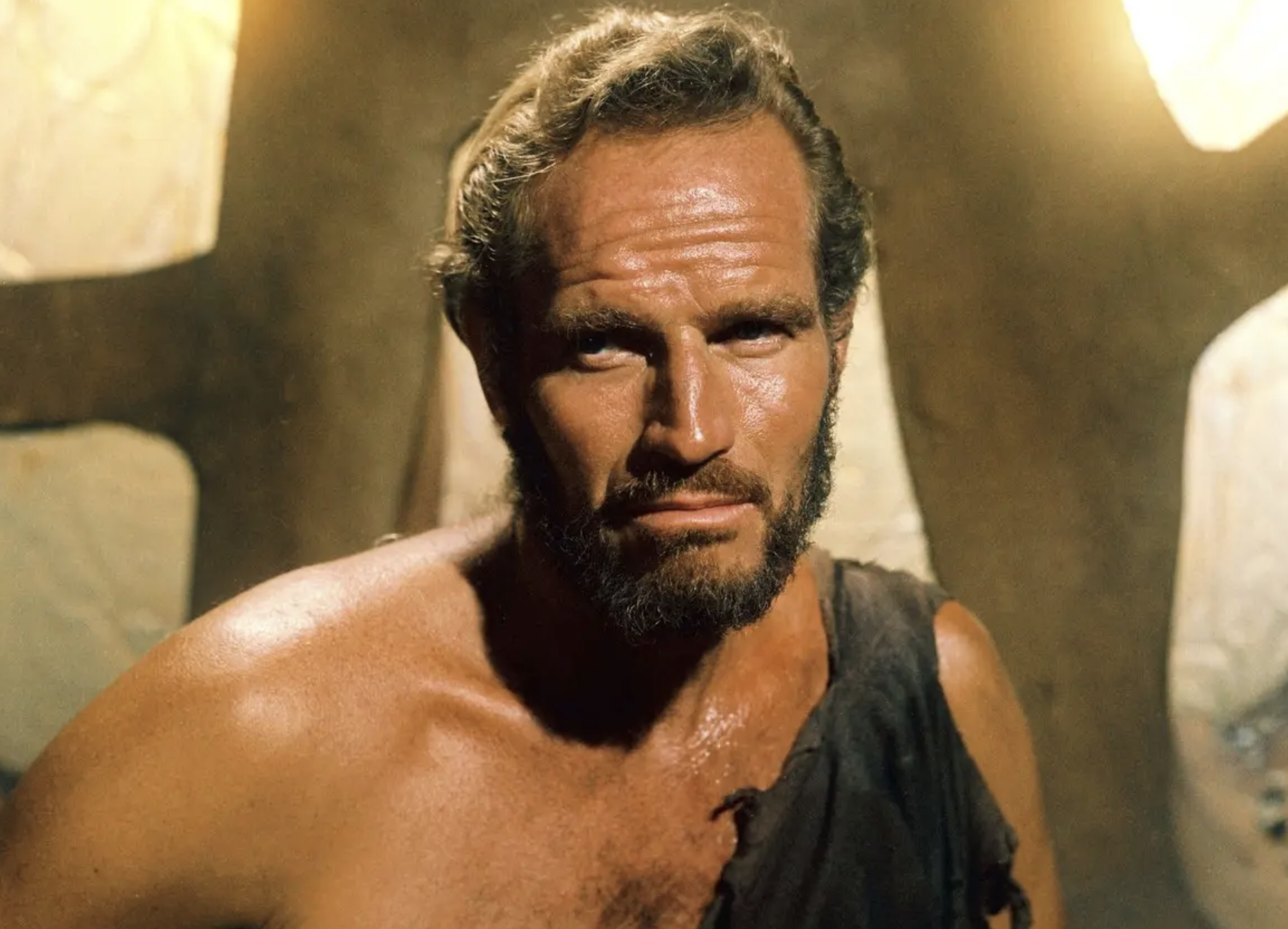
Before it became one of Hollywood’s biggest sci-fi franchises, Planet of the Apes was viewed as a bizarre gamble about talking monkeys ruling the Earth — and behind the scenes, the making of the cult classic was reportedly just as wild as the movie itself.
As the legendary 1968 blockbuster approaches its 60th anniversary, explosive new details are resurfacing about screaming actors, painful prosthetics, brutal filming conditions, and the shocking moment that created one of the most famous endings in movie history.
Oscar winner Charlton Heston didn’t hesitate when producer Arthur Jacobs pitched him the now-iconic story of astronauts crash-landing on a terrifying planet controlled by intelligent apes.
“I liked the idea of the talking monkeys and a different civilization,” Heston once admitted.
But studio executives reportedly thought the concept sounded completely insane.
It took producer Richard D. Zanuck and Jacobs pushing relentlessly before 20th Century Fox finally agreed to bankroll the risky project — a decision that would turn into a monster payday.
“It ended up being one of their biggest hits,” makeup technician Thomas R. Burman revealed.
What audiences never saw, however, was the misery unfolding underneath the ape masks.
The cast endured suffocating wool costumes in brutal triple-digit heat while spending up to FOUR HOURS every morning glued into heavy foam latex prosthetics that transformed them into chimpanzees, gorillas, and orangutans.
And for some actors, the process became unbearable.
Roddy McDowall — who famously played Cornelius — reportedly suffered severe claustrophobia inside the makeup and would rip the prosthetics off his face in agony after filming wrapped.
“At the end of the day he would grab the prosthetic and rip it off his face,” documentary filmmaker Will Conlin said. “It would rip the hairs out of your skin.”
Off-camera, the set reportedly turned into a surreal ape kingdom straight out of the movie itself.
Crew members revealed the actors bizarrely separated themselves by species during meals, with gorillas sitting together, chimpanzees forming their own group, and orangutans eating separately like rival gangs inside a cafeteria.
“It was very funny,” makeup artist Daniel Striepeke recalled. “You’d see four or five gorillas around a table playing cards.”
The groundbreaking ape makeup became one of the most expensive parts of the film, with nearly 50 makeup artists working at the same time and a jaw-dropping $300,000 budget — an enormous amount for the late 1960s.
Meanwhile, the movie’s now-legendary ending almost never happened.
The shocking Statue of Liberty reveal — still considered one of the greatest twist endings in cinema history — was reportedly born during a casual drinking session between art director William J. Creber and director Franklin J. Schaffner.
Creber said he suddenly grabbed a cocktail napkin and sketched the scene in seconds.
“That was the ending of the picture,” he said. “It all came from the little storyboard on the back of the napkin.”
The film also attracted huge stars before cameras even rolled.
A young Tom Selleck reportedly auditioned, while Hollywood legend Ingrid Bergman later regretted rejecting the role of Dr. Zira, which eventually went to Kim Hunter.
And screen icon Edward G. Robinson completely bailed after testing the ape makeup himself.
“I can’t wear that make-up all day,” he reportedly complained. “It’s just too much for me.”
Actress Linda Harrison — who played Nova and later married Zanuck — admitted she was mesmerized by Heston while filming.
“He seemed like such a good man,” she said.
Harrison also revealed Heston worried about filming his first nude scene at age 45 and became obsessed with getting into shape beforehand.
“He said he was very skinny,” she remembered. “So he just worked out and developed and ended up with a really nice physique.”
Nearly 60 years later, Planet of the Apes remains one of Hollywood’s most shocking success stories — a strange little movie about talking apes that turned into a billion-dollar empire and changed science fiction forever.
Discover more from
Subscribe to get the latest posts sent to your email.
 What’s New Today