

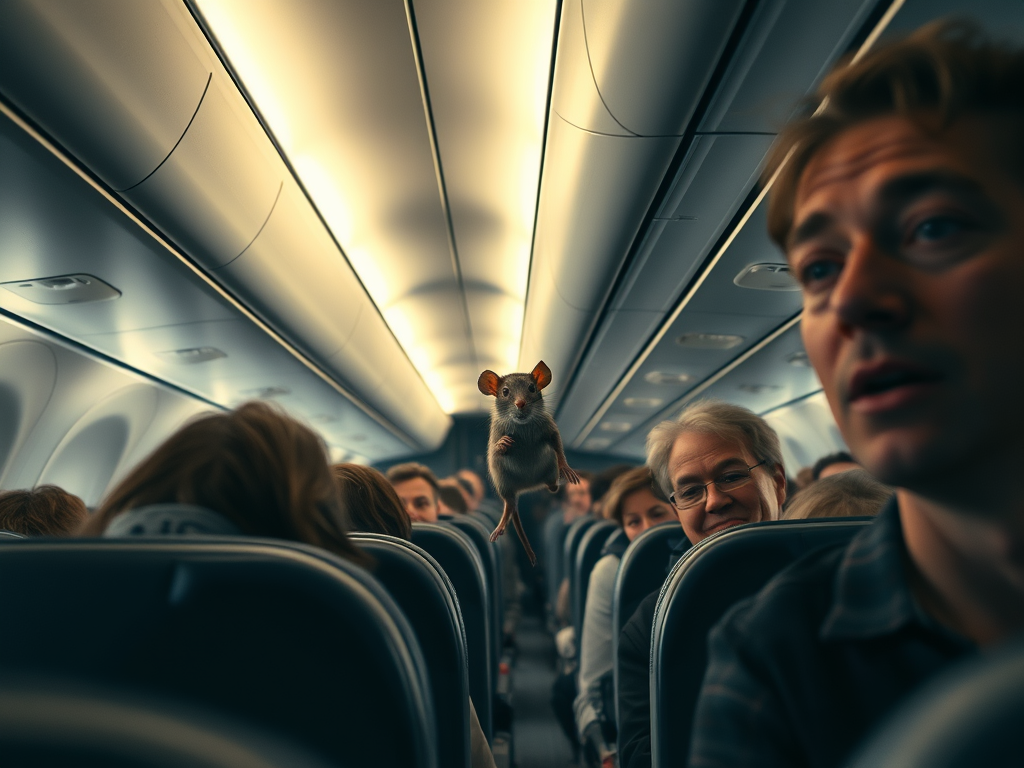
What started as a tropical getaway turned into a mid-air nightmare when passengers on a KLM Airbus A330 discovered they weren’t alone — a rat was allegedly crawling above their heads somewhere over the Atlantic Ocean.
According to The Independent, the flight — bound for Bonaire with a stop in Aruba — had 250 passengers on board when chaos broke out. Witnesses claim the rodent was first spotted darting across the top of a curtain rail before leaping onto the overhead bins as horrified passengers watched.
“The rat was discovered over the ocean,” a KLM spokesperson confirmed to Dutch media. “Very unfortunate for the passengers who had to experience this.”
Crew members reportedly kept a nervous eye on the creature for hours, trying to track its movements while maintaining calm in the cabin. RTL News reported that the pilot had “no real option” but to continue to Aruba, as diverting mid-ocean wasn’t possible.
Once they finally landed, the captain announced that the connecting flight to Bonaire was canceled and the aircraft would be taken out of service for an emergency deep clean. Ground crews were ordered to search every inch of the cabin to make sure the stowaway — and any possible friends — were gone before the plane could return to service.
Passengers described the ordeal as “creepy,” “disgusting,” and “like something out of a horror movie.” One traveler told Dutch reporters that people were “lifting their feet off the floor and clutching their bags” as the rat made its surprise appearance.
KLM has not said how the animal managed to sneak on board, though aviation experts note that rodents can sometimes find their way into aircraft during catering or maintenance stops.
For those hoping for a sunny escape to the Caribbean, it was a flight they won’t soon forget — and one that’s now being dubbed by passengers online as “the flight of the rat.”
Discover more from
Subscribe to get the latest posts sent to your email.