

A British historian claims he may have finally uncovered the identity of Jack the Ripper, the infamous serial killer who terrorized London’s Whitechapel district more than 130 years ago.
Russell Edwards has spent years investigating the case and recently renewed calls for a formal inquest into Aaron Kosminski, a Polish-Jewish barber long suspected of involvement in the grisly murders.
Edwards’ theory centers on a shawl said to have been found near the body of Catherine Eddowes, one of the Ripper’s five canonical victims. The historian purchased the shawl in 2007 and had forensic experts analyze traces of blood and semen on the fabric. He then compared the results to DNA from living descendants of both Eddowes and Kosminski. Edwards told NewsNation, “Oh, without a doubt, 100% it’s him.”
Kosminski, a Polish immigrant who lived in Whitechapel at the time of the murders, was committed to a psychiatric asylum in 1891 after threatening his sister with a knife. He reportedly suffered from paranoia and auditory hallucinations, and he spent the rest of his life in institutions, dying in 1919.
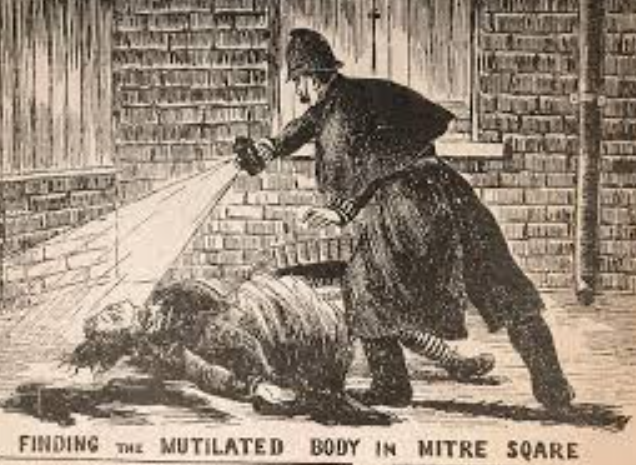
The Jack the Ripper case, which began in 1888, shocked Victorian London. The killer targeted prostitutes in the East End, mutilating their bodies and removing organs, which led investigators to believe he had some anatomical knowledge. Despite intense police investigations, including efforts by Scotland Yard, the murderer was never caught, leaving the case shrouded in mystery.
Edwards isn’t the first to claim the case has been solved using DNA. Crime writer Patricia Cornwell famously argued that British painter Walter Sickert was the Ripper based on genetic analysis of letters, while an Australian scientist suggested the killer could have been a woman.
However, many experts remain skeptical of Edwards’ conclusions. The mitochondrial DNA used in his analysis only traces maternal lineage and isn’t precise enough to definitively identify Kosminski. Critics also question the shawl’s authenticity, since it was never preserved as official evidence and has changed hands multiple times over the decades.
Dr. Hansi Weissensteiner, a mitochondrial DNA expert at Innsbruck Medical University, explained that the results “could match many people” and can only be used to exclude suspects, not confirm them. Other geneticists have criticized Edwards for overstating the certainty of his findings.
Despite the skepticism, Edwards remains confident he has uncovered the truth. But after more than a century, with evidence degraded and sources uncertain, the mystery of Jack the Ripper may never be fully solved.
Discover more from
Subscribe to get the latest posts sent to your email.