

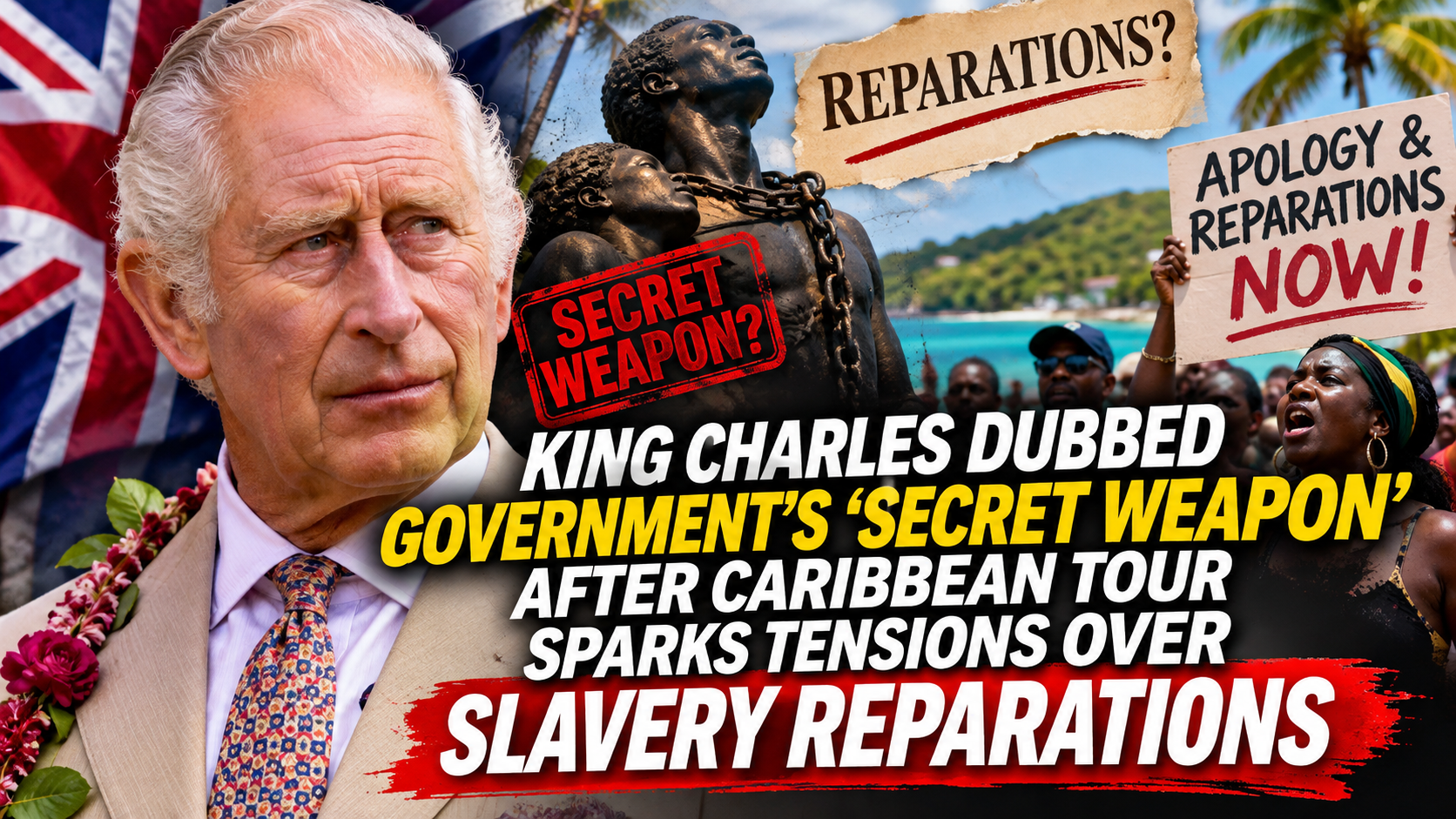
King Charles has been hailed as Britain’s “secret weapon” following a politically charged Caribbean tour that placed him at the center of a growing battle over slavery reparations and renewed questions about the monarchy’s future.
The 77-year-old monarch returned from his nine-day trip on November 4 after visiting the Bahamas, Guyana, and Antigua and Barbuda, where demands for a formal apology and financial compensation for Britain’s role in the transatlantic slave trade overshadowed much of the diplomatic agenda.
Despite mounting pressure from Caribbean leaders and protesters, Charles stopped short of delivering the apology campaigners wanted, leaving the British government facing a dispute that is far from settled.
During a November 3 address to leaders of the 56-nation Commonwealth, the King described the slave trade as a “shameful chapter” of history that filled him with horror and profound personal sorrow.
He acknowledged that the consequences of slavery continue to affect Caribbean nations and called for stronger partnerships focused on education, economic opportunity, and development. However, he offered neither a formal apology nor financial reparations.
The controversy took another turn when British Prime Minister Andy Burnham signaled that his government was open to an official apology, a significant shift in Britain’s approach to its colonial past.
Burnham nevertheless rejected direct financial reparations, arguing that people living today should not be held personally responsible for atrocities committed generations ago.
By November 5, Commonwealth leaders had announced that Britain had agreed to structured, time-limited discussions addressing the historical harms of slavery. The agreement marked diplomatic progress but did not commit the government to compensation.
Caribbean leaders have made clear that an apology alone would not satisfy their demands. Their broader proposals include debt relief, investments in education and health care, and financial compensation.
Amid the controversy, a senior royal aide offered a revealing assessment of Charles’ increasingly important diplomatic role, describing the monarch as a powerful asset for a government navigating sensitive international disputes.
“It’s a great secret weapon to send the king,” the aide told reporters, suggesting Charles could build relationships and ease tensions in ways elected politicians sometimes cannot.
The aide praised the monarch’s handling of the difficult tour, saying he had demonstrated considerable diplomatic skill despite the politically charged atmosphere.
The remarks also highlighted the delicate position Charles occupies. Although the King is expected to remain politically neutral, the British government increasingly relies on him to strengthen relationships abroad, including during sensitive diplomatic exchanges involving President Donald Trump.
But the Caribbean controversy raises a much bigger question about the royal family’s future.
Charles remains head of state in both the Bahamas and Antigua and Barbuda, although the possibility of abandoning the monarchy has been debated in the region. Barbados already severed its constitutional ties to the British crown in 2021, becoming a republic.
Antigua and Barbuda Prime Minister Gaston Browne has also supported discussions about moving toward a republic while continuing to push for meaningful engagement over slavery and colonialism.
The royal aide acknowledged that the monarchy’s future ultimately rests with the people of each country, emphasizing that the royal family would continue serving only where it remained welcome.
For Charles, the tour may have strengthened his reputation as one of Britain’s most valuable diplomatic figures. Yet it also exposed an uncomfortable reality: The same historical ties that give the monarchy its international influence are now fueling demands for accountability and renewed questions about whether the crown still has a place in the Caribbean.
Discover more from
Subscribe to get the latest posts sent to your email.