

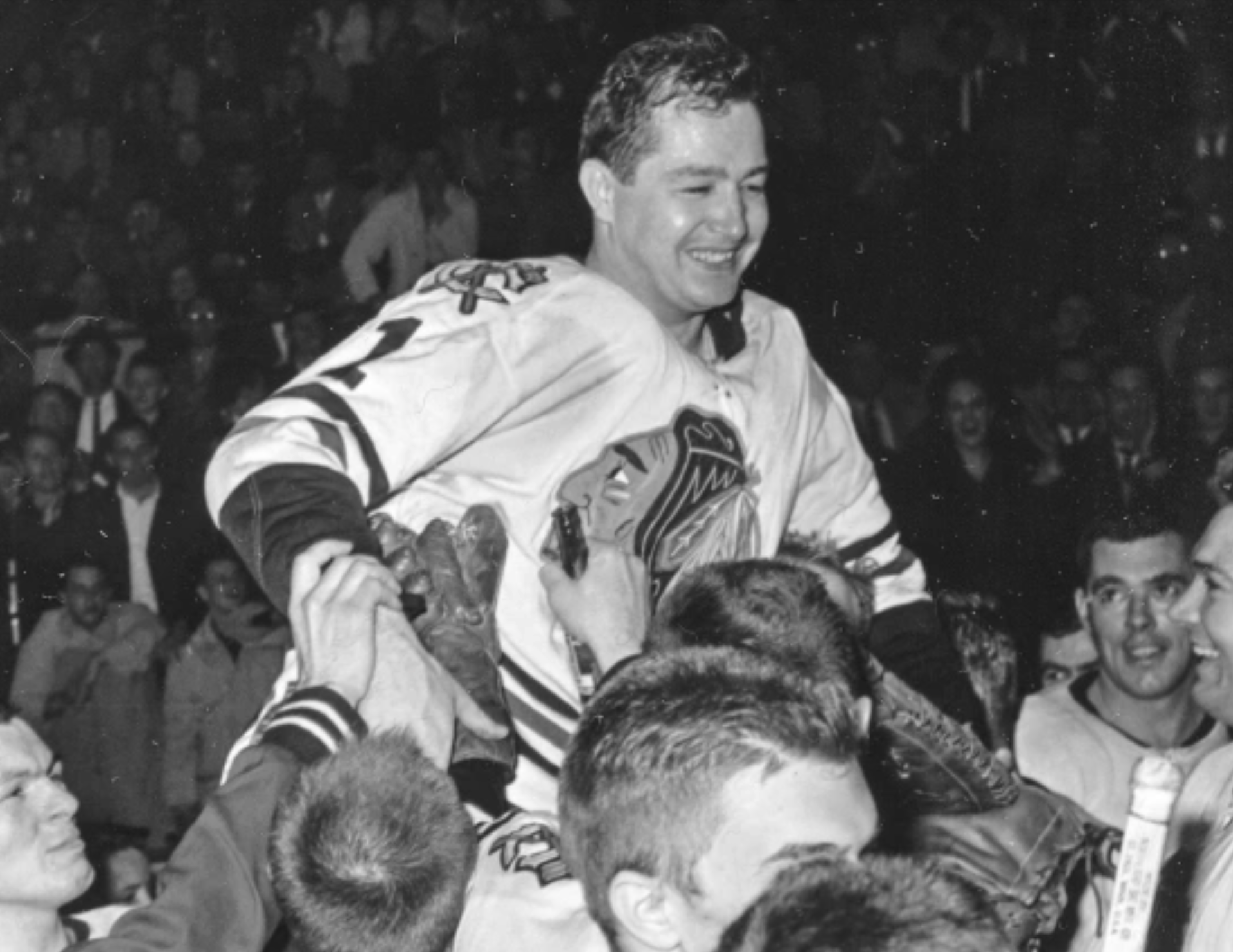
Hockey has lost one of its true originals. Glenn Hall, the Hall of Fame goaltender known across the sport as “Mr. Goalie” and owner of one of the most unbreakable records in NHL history, has died at the age of 94.
The Chicago Blackhawks confirmed his passing on Thursday, calling Hall “a cornerstone of our franchise” and praising his “monumental” legacy. According to the team, Hall died Wednesday at a hospital in Stony Plain, Alberta, after his family shared the news with the organization.
Hall’s legend is built on toughness that’s almost impossible to imagine today. From 1955-56 to 1962-63, he started 502 consecutive regular-season games in net — all without wearing a mask. When you include the playoffs, that ironman streak jumps to 552 straight starts.
“Glenn was sturdy, dependable and a spectacular talent in net,” NHL Commissioner Gary Bettman said. “That record… still stands, probably always will, and is almost unfathomable — especially when you consider he did it all without a mask.”
The Blackhawks held a moment of silence before Wednesday night’s game against the St. Louis Blues to honor Hall and former coach and executive Bob Pulford, who died January 5.
Nicknamed “Mr. Goalie,” Hall owned the crease in the days of the NHL’s Original Six and managed to carry that dominance into the league’s first big expansion. He helped backstop Chicago to the Stanley Cup in 1961, then later carried the St. Louis Blues to the Cup Final in 1968, where he won the Conn Smythe Trophy as playoff MVP even though the Blues fell to Montreal. He’s one of just six Conn Smythe winners whose team didn’t win the Cup.
Before becoming a Chicago icon, Hall broke into the league with the Detroit Red Wings and won the Calder Trophy as rookie of the year in 1956. After two seasons, he was traded to the Black Hawks in a blockbuster deal that also brought star forward Ted Lindsay to Chicago.
In the Windy City, Hall picked up two of his three Vezina Trophies as the league’s top goaltender (1963 and 1967). When the NHL doubled in size from six teams to twelve, the Blues grabbed him in the expansion draft. Even in his late 30s, he dragged the brand-new franchise all the way to the Final in each of its first three seasons and won the Vezina again at age 37.
Hall was also in net for one of the most iconic moments in hockey history: Bobby Orr’s 1970 Stanley Cup–winning overtime goal. Orr’s famous “flying through the air” celebration happened right after he beat Hall in Game 4 of the Final. Hall played one more season in St. Louis before retiring in 1971.
“His influence extended far beyond the crease,” Blues chairman Tom Stillman said. “From the very beginning, he brought credibility, excellence, and heart to a new team and a new NHL market.”
Born in Humboldt, Saskatchewan, Hall finished his career with 407 wins and 84 shutouts in 906 regular-season games. He was a seven-time first-team NHL All-Star, was inducted into the Hockey Hall of Fame in 1975, and had his No. 1 retired by the Blackhawks in 1988. He was later named one of the NHL’s top 100 players of all time.
Blackhawks chairman and CEO Danny Wirtz called him “one of the greatest and most influential goaltenders in the history of our sport.”
“We are grateful for his extraordinary contributions to hockey and to our club, and we will honor his memory today and always,” Wirtz said.
Modern greats grew up trying to live up to Hall’s standard. Fellow Hall of Famer Martin Brodeur, the NHL’s all-time wins leader, shared a photo of their last meeting and a heartfelt tribute.
“Glenn Hall was a legend, and I was a big fan of his,” Brodeur wrote. “He set the standard for every goaltender who followed. His toughness and consistency defined what it meant to play.”
For generations of fans and goalies, “Mr. Goalie” wasn’t just a nickname — it was the job description he helped create.
Discover more from
Subscribe to get the latest posts sent to your email.