

After more than seven decades of mystery, a scholar in the Netherlands has finally cracked one of the last unreadable codes buried within the Dead Sea Scrolls — revealing long-lost biblical writings about prophecy, divine judgment, and the fate of Israel.
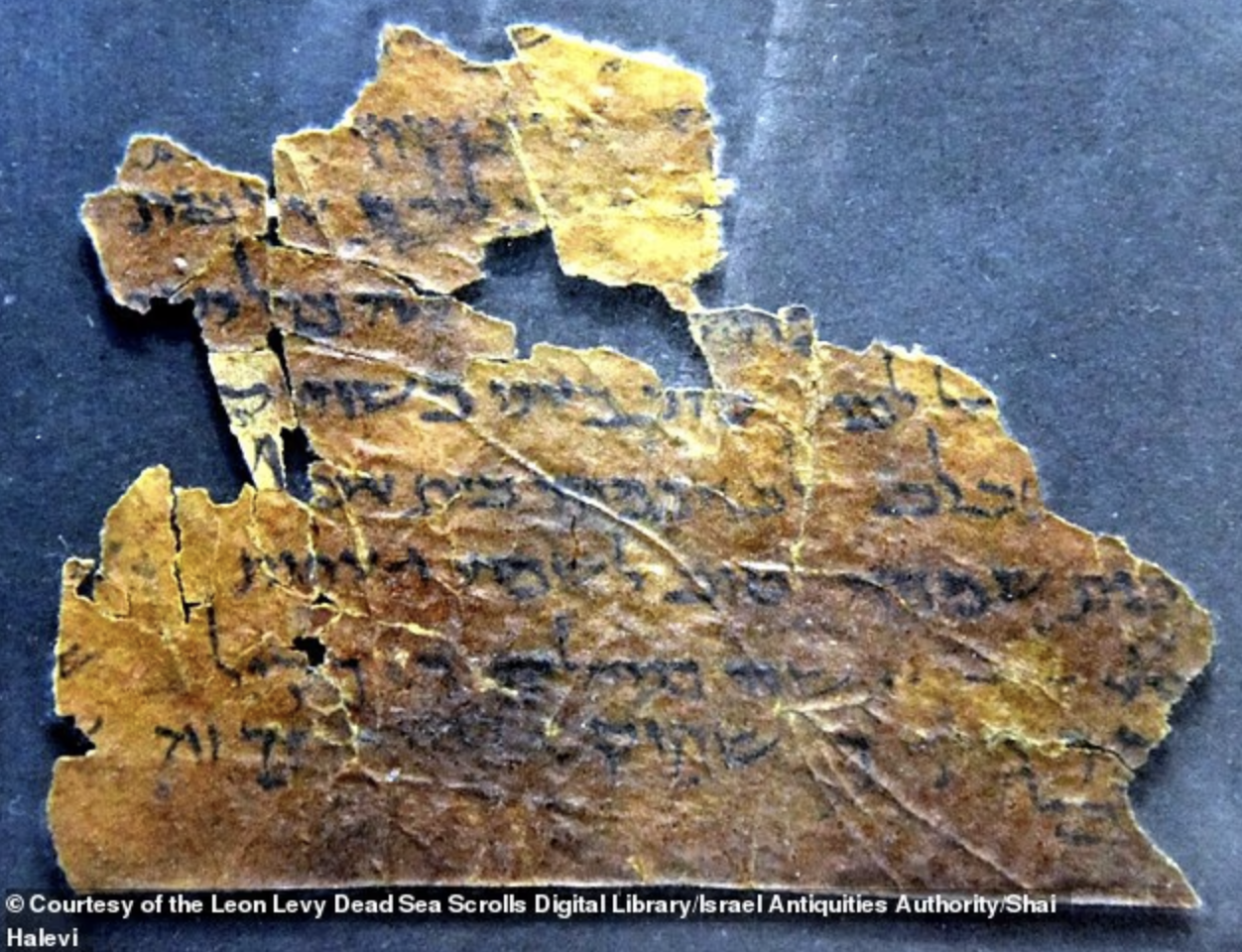
Dr. Emmanuel Oliveiro of the University of Groningen has decoded what experts once called “impossible” to read: the Cryptic B manuscripts, two ancient fragments known as 4Q362 and 4Q363.
“These fragments were like locked doors for generations,” Oliveiro said in a university statement. “Once the system became clear, the language of the Bible came pouring through.”
The Dead Sea Scrolls — discovered between 1947 and 1956 in caves near Qumran, along the West Bank — include the oldest surviving versions of many Hebrew scriptures. The texts, preserved by a Jewish sect believed to be the Essenes, shed light on early Judaism’s rituals, prophecies, and apocalyptic hopes.
While most scrolls were written in Hebrew or Aramaic, a few used mysterious ciphers. Cryptic A was solved in the 1950s. But Cryptic B, filled with strange, distorted letters and inconsistent handwriting, defied every attempt — until now.
Oliveiro discovered that each cryptic symbol mapped cleanly to a Hebrew letter. When translated, the manuscripts echoed familiar biblical themes — God’s power, Israel’s destiny, and a coming Messiah.
Among the legible words: Yisrael (“Israel”), Elohim (“God”), Judah, and Jacob.
One fragment speaks of “the tents of Jacob” and “your glory, Elohim,” echoing verses from Jeremiah 30:18 and Malachi 2:12. Scholars say these parallels point to prophecies of restoration and divine justice after catastrophe.
“These are not random phrases,” Oliveiro explained. “They fit perfectly into the prophetic imagination of the late Second Temple period — a time when people were obsessed with end-time renewal.”
The fragments themselves are heartbreakingly small — some no bigger than a fingernail. The ink, faded and uneven, rests on cracked leather darkened by centuries underground.
Only two manuscripts used the cipher entirely, suggesting they served a special purpose. “It wasn’t about hiding secrets,” Oliveiro said. “It was about creating sacred distance — a script only the initiated could read.”
He believes the cryptic style marked the text as holy, not secret, perhaps used by priestly elites during ritual readings.
Previous researchers dismissed Cryptic B as gibberish. The shapes seemed inconsistent, even nonsensical. But Oliveiro noticed subtle patterns — a rhythm in the letter spacing that hinted at meaning.
After years of cross-referencing Hebrew vocabulary and scribal quirks, the message finally clicked.
“It wasn’t mystical,” he said. “It was ingenious simplicity disguised as chaos.”
The discovery not only revives a lost language system but also helps scholars reconstruct missing parts of the Dead Sea Scrolls — many of which were damaged, stolen, or scattered in the black-market trade that followed their discovery.
Experts say the find deepens our understanding of how ancient Jewish sects viewed sacred text. “The Qumran scribes were obsessed with preserving God’s words,” said Dr. Sharon Levin, a biblical historian at Tel Aviv University who was not involved in the research. “Even when they wrote in code, their goal was reverence — not secrecy.”
The revelation underscores how much of early biblical tradition remains buried, both literally and linguistically.
For believers and historians alike, the breakthrough is monumental.
“It reminds us that the Bible was a living document,” Oliveiro said. “Every word carried power — even when written in symbols no one could read.”
Discover more from
Subscribe to get the latest posts sent to your email.
[…] WhatsNewToday.org […]