

Newly surfaced documents are reigniting disturbing questions about how Jeffrey Epstein may have secretly gathered leverage over powerful figures—and how far his alleged surveillance network really stretched.
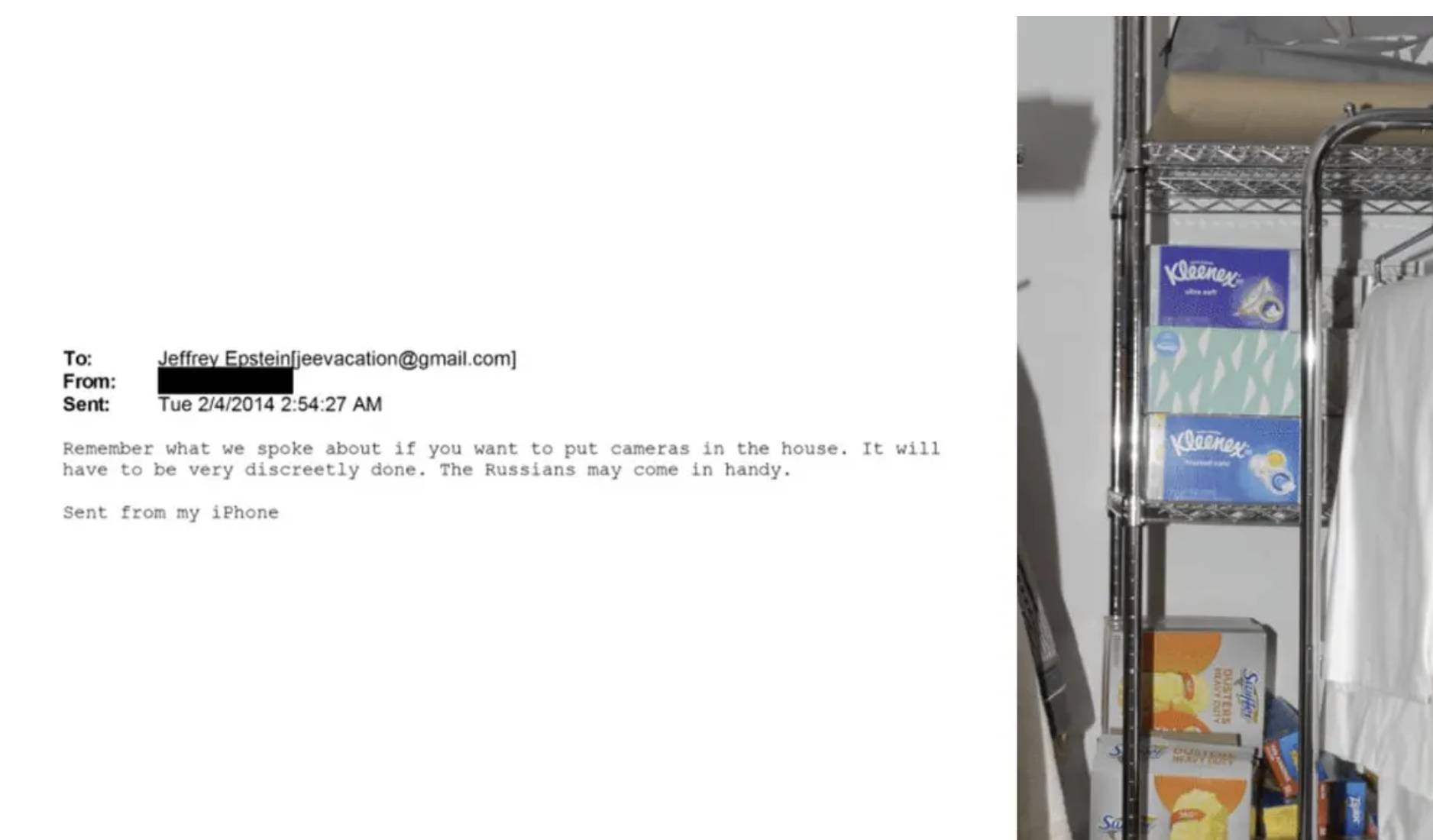
According to the explosive files, Epstein is said to have hidden covert cameras inside everyday household items, including something as unsuspecting as Kleenex boxes. The alleged setup allowed surveillance devices to blend seamlessly into the background at his lavish properties, including his Upper East Side mansion in New York and his Palm Beach estate in Florida.
Sources familiar with the documents claim emails detail instructions for installing motion-activated cameras disguised in tissue boxes. One message reportedly warned that the operation needed to be carried out “very discreetly,” adding that “the Russians may come in handy”—a line now raising eyebrows about possible international angles.
A source close to the investigation described the tactic as anything but random. Instead, they say it points to a calculated effort to gather compromising material without detection—turning ordinary objects into tools for potential blackmail.
But the revelations don’t stop there.
The documents also outline what appears to be a sprawling network of storage units across the country. Records show Epstein allegedly leased multiple units in states like New York and Florida, storing computers, photographs, and electronic equipment dating back as early as 2003. Payments reportedly continued for years—even after authorities had begun closing in.
Even more shocking, insiders claim private investigators were brought in ahead of a police raid in the mid-2000s to remove sensitive materials from Epstein’s Palm Beach home. That operation, sources say, may have included copying and relocating data to keep it out of investigators’ reach.
One insider described the effort as “systematic,” alleging that hard drives were cloned and duplicated—creating multiple copies of potentially explosive material stored in different locations. The goal, they claim, was simple: make sure no single raid could uncover everything.
That strategy may have worked.
According to the files, Epstein’s alleged operation extended beyond just one property, forming what some describe as a fragmented surveillance network. Equipment and data were reportedly spread across homes, storage facilities, and even his private island in the U.S. Virgin Islands.
Some of the material may have been wiped before being moved, but it’s still unclear how much data—if any—remains out there.
Now, the biggest question looming over these revelations is chilling: if multiple copies of sensitive information were created and scattered, could parts of Epstein’s alleged cache still exist beyond the reach of authorities?
And if so… who might still have access to it?
Discover more from
Subscribe to get the latest posts sent to your email.