

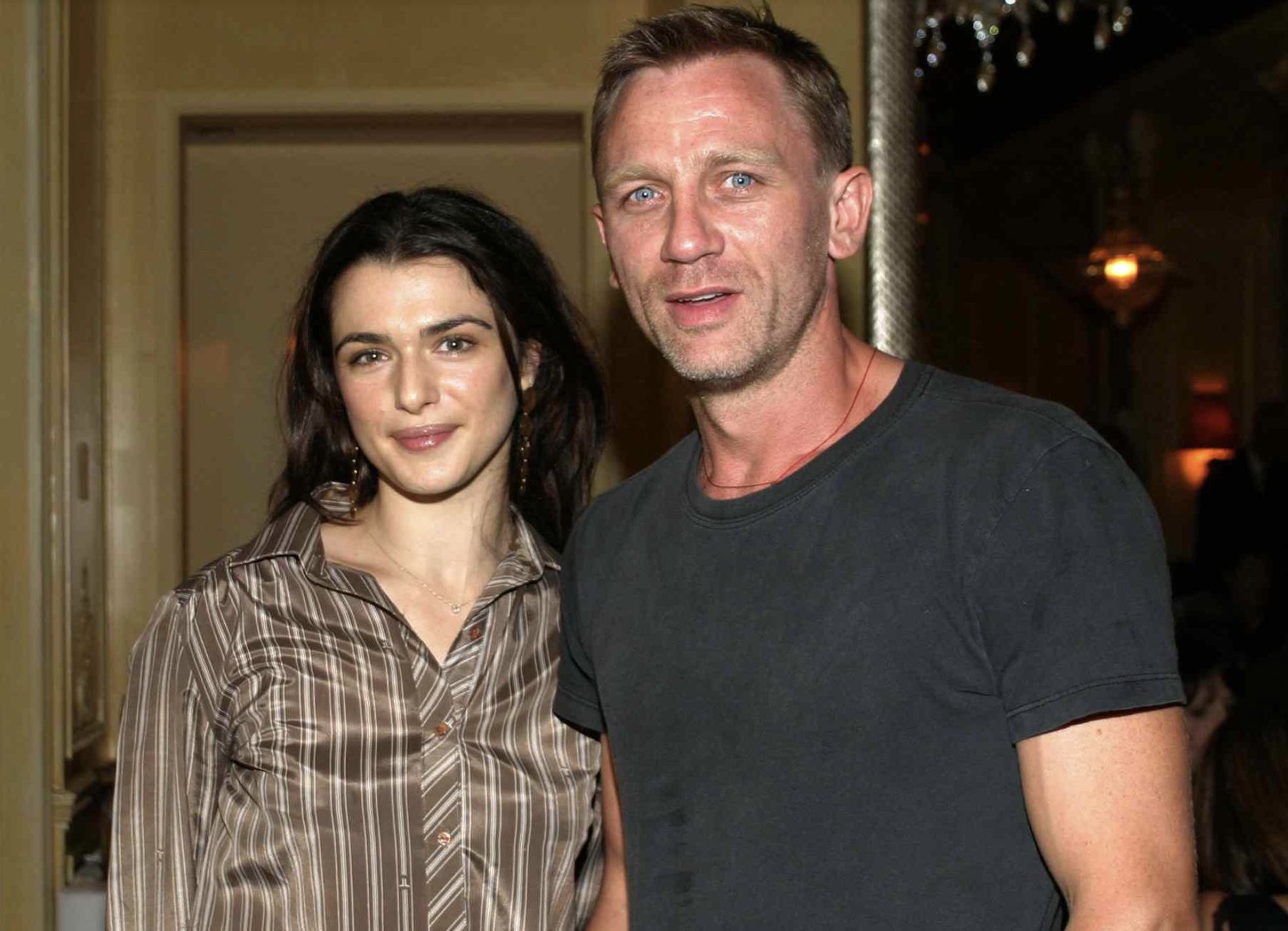
For more than a decade, Rachel Weisz and Daniel Craig have treated fame like weather: unavoidable, occasionally violent, and best endured indoors.
They are not the couple of coordinated Instagram posts. Not the couple of podcast confessions. Not the couple who turns a marriage into a brand. In an industry that rewards exposure, Weisz and Craig have made a different wager — that the less they share, the longer the thing lasts.
Now, that wager is being tested.
Weisz is returning to the center of the conversation with Vladimir, a steamy Netflix series that is already drawing the kind of attention that doesn’t stay politely on the screen. The role is headline-friendly in the way privacy is not, and it has had a predictable side effect: renewed fascination with the marriage Weisz and Craig have spent years trying to keep un-fascinating.
The marriage is not new. The scrutiny is.
Their first meeting has the unglamorous texture of real careers being built. It was 1994, in London, at the National Theatre Studio, on a project called Les Grandes Horizontales — the kind of early-credit work that rarely makes it into a celebrity timeline.
They were young actors then, known in the way talented people are known before global fame chooses a few. Craig, years away from Bond, was also coming out of his first marriage. He and his first wife, actress Fiona Loudon, share a daughter, Ella.
For years, Weisz and Craig lived as parallel lines — in the same city, in the same industry, brushing close enough to recognize each other, not close enough to become a story.
Then, in 2010, the lines crossed again.
The pivot point was Dream House, a psychological thriller in which they played spouses. Films create artificial intimacy all the time; usually it evaporates at wrap. This one didn’t.
By late 2010, they were being seen together in ways that suggested the plot had moved off camera — including a countryside walk in Dorset in December, where they were reported to be relaxed and affectionate, their conversation doing what the public does not: enclosing them.
By February 2011, the relationship had started to behave like a fact rather than a rumor. They spent Valentine’s Day in New York. And six months later they did something that seems almost antique now: they got married without turning it into content.
Their wedding took place in June 2011. It was so small it sounded, at first, like a mistake. Two close friends attended, along with Craig’s daughter and Weisz’s son, Henry, from her previous relationship with director Darren Aronofsky.
Craig later described the point of it in language that reads like a mission statement: “We got away with it. We did it privately. And I have a lot of people to thank for that. But that was the point. We did it for private reasons.”
The line lands with extra force now, in an age when celebrities announce pregnancies via cinematic reels and announce breakups via coordinated statements that look like brand strategy. Their wedding was not a performance. It was an escape.
Weisz has never fully embraced the cultural assumption that marriage is the apex of adulthood, or that romance is a story the public deserves.
“I never thought I would get married,” she said in 2018. “It was not an ambition of mine… Then it just happened, happily, at a more mature moment.”
But the sharpest articulation of their boundary-setting came earlier, in 2016, when she linked their privacy to Craig’s particular level of fame — the kind that warps a room and follows you down streets.
“He’s just too famous,” she said. “It would be a betrayal. You have to protect your marriage.”
Then she explained the change that age, marriage, and experience impose: “When you’re young, you tell your girlfriends everything… When you’re married, that door closes. The audience goes, and you’re in your own life.”
The phrasing is unromantic in the way truth often is. The audience goes. The work ends. The door closes.
Together, they share a daughter, Grace. In 2018, Weisz confirmed she was expecting, speaking with the low-drama joy that has become her signature in personal matters: “I’ll be showing soon,” she said, adding, “Daniel and I are so happy. We’re going to have a little human.”
Craig became a father early; his daughter Ella was born in 1992, when he was 24. Weisz’s son Henry has largely grown up out of the spotlight despite the gravitational pull of two famous parents.
Their household, by design, is less Hollywood tableau than logistical project.
Weisz has described an approach to work that sounds more like co-management than celebrity romance: they alternate professional commitments so one of them is always home. “We really love our private life as a life, as a family,” she said, adding that they can “swap out” — she stays home while he works, then they switch.
It is an unflashy system, which may be why it has worked.
Craig, too, has suggested that having a young child has changed his tolerance for long absences — a subtle but consequential shift in an industry built on location shoots and months away.
Every so often, they re-enter the public square. They have appeared together at major cultural moments tied to Craig’s work — premieres, festivals, high-profile red carpets — enough to reassure the world they still exist, not enough to feed it.
They’ve been seen in Madrid for The Girl With the Dragon Tattoo in 2012. They showed up at the 2022 BFI London Film Festival to support Glass Onion: A Knives Out Mystery. At the 2024 Venice Film Festival, where Craig premiered Queer, attention swirled around the couple’s appearance as much as the film itself, with Weisz wearing a glittering Versace gown.
The pattern holds: visibility as punctuation, not lifestyle.
Vladimir is not the kind of project that quietly passes through the culture. The series, and Weisz’s performance within it, is built for talk — the kind of talk that is never confined to the work. It bleeds outward, searching for context, searching for gossip, searching for the one thing the public always wants from celebrities: proof of what they are like when the camera is off.
In this case, it means the spotlight swinging, once again, toward the marriage Weisz and Craig have tried to keep behind a curtain.
Behind the scenes, Weisz has said, they remain invested in each other’s artistic lives — “We respect each other,” she explained in 2018. “We appreciate each other’s work.”
It’s a calm sentence in a noisy moment. But it also suggests the hidden engine of their durability: admiration without performance, privacy without apology.
Hollywood has its usual scripts for marriage — the glamorous union, the strategic pairing, the inevitable implosion. Weisz and Craig have spent years refusing all of them.
The question now is whether the public will let them keep refusing.
Or whether, this time, the door won’t stay closed.
Discover more from
Subscribe to get the latest posts sent to your email.